Art Guide · Painters
Caspar David Friedrich
1774–1840
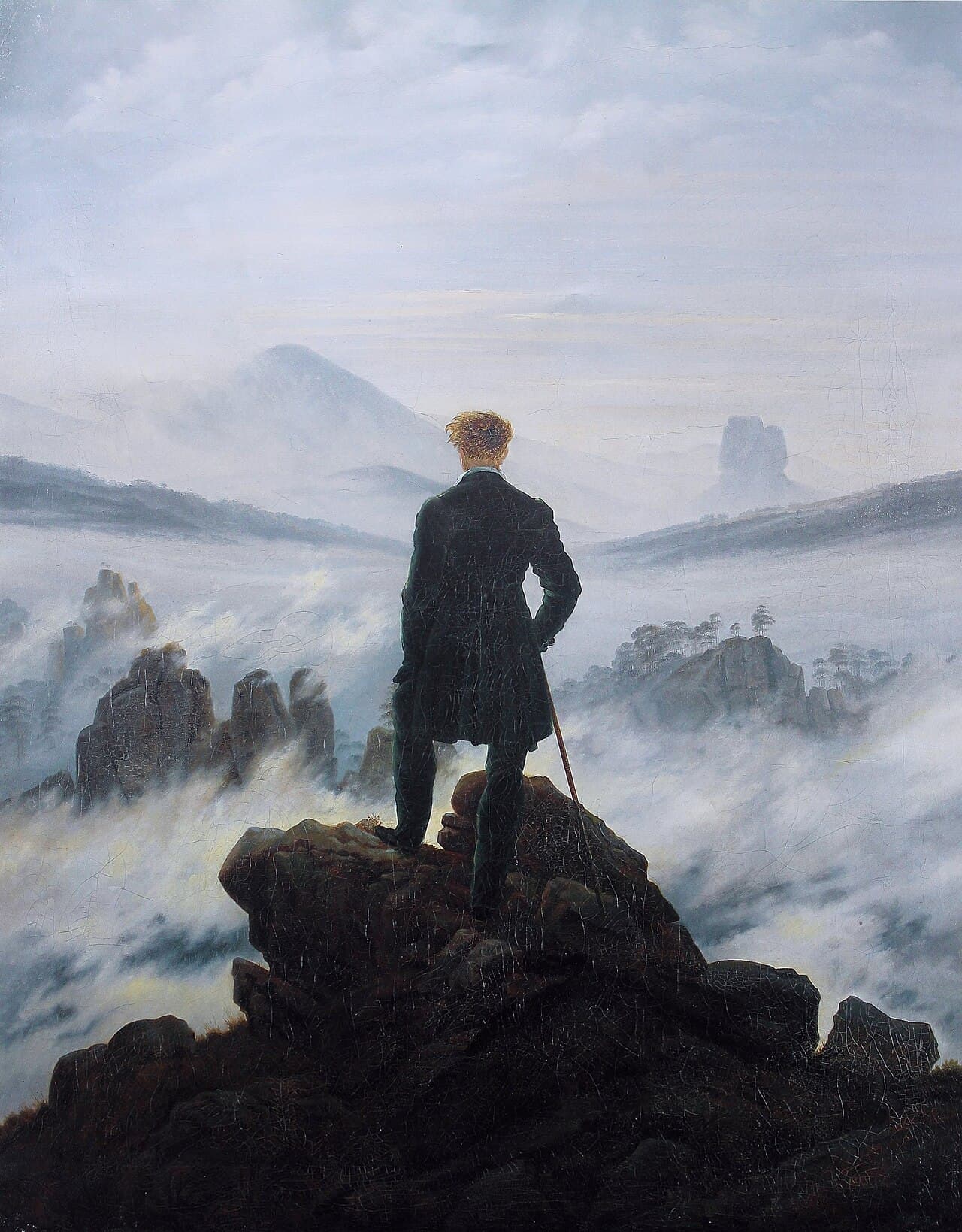
Caspar David Friedrich (1774–1840) was the foremost landscape painter of German Romanticism. With figures seen from behind and misty, boundless landscapes, he painted humanity’s solitude and awe before nature.
Last updated: · Iconica Society editors
Life
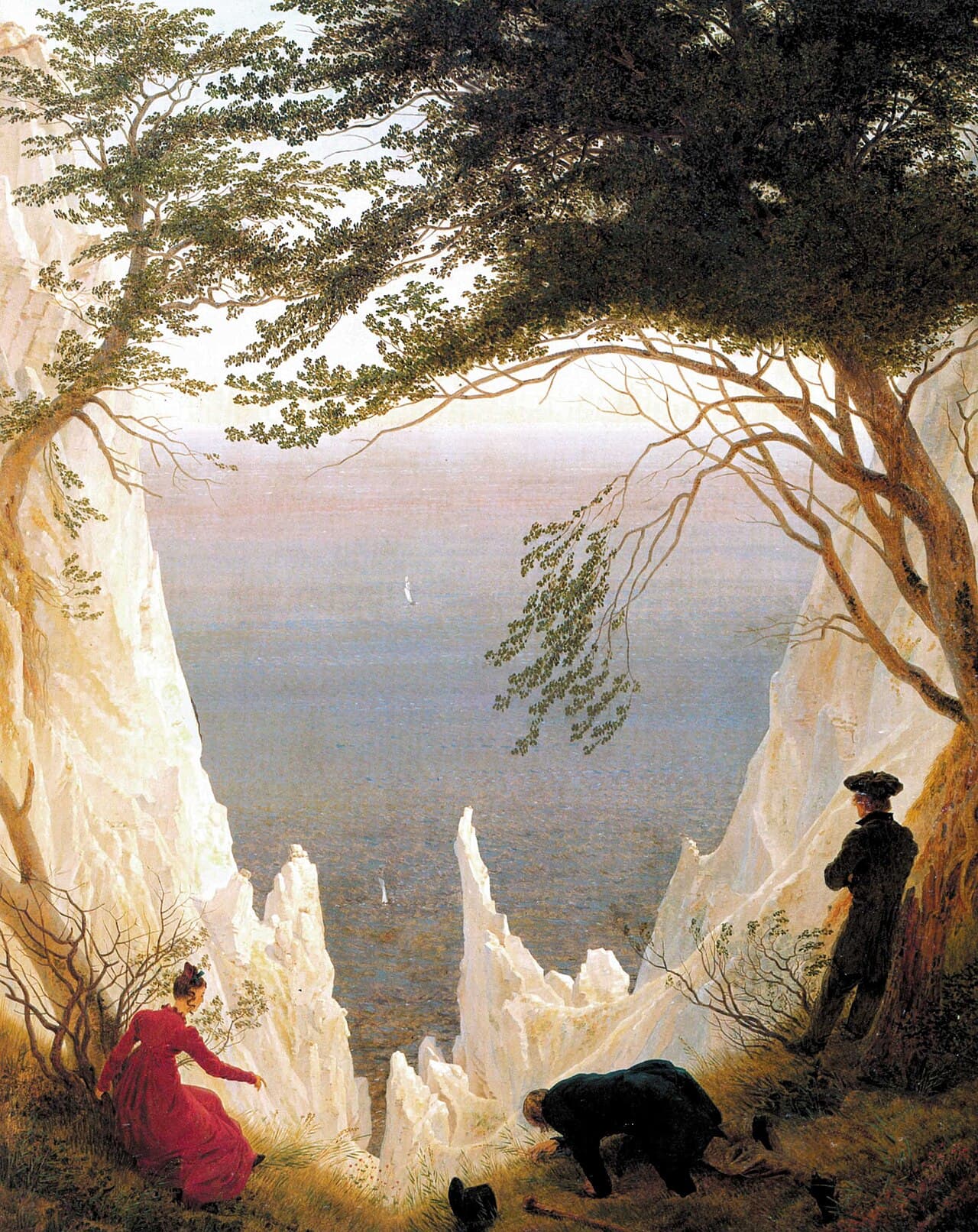
Born in Greifswald on the Baltic coast, he trained at the Copenhagen Academy. He spent most of his life in Dresden, working from sketches made on trips to the Baltic, the island of Rügen and the mountains. He married in 1818 and honeymooned on Rügen.
Largely forgotten after his death, he was rediscovered in the early 20th century and is now one of the iconic names of German painting.
Style and key works
Friedrich’s signature is the figure seen from behind (Rückenfigur), looking into the landscape with the viewer. Wanderer above the Sea of Fog (c. 1818, Hamburger Kunsthalle) has become the emblem of Romanticism. Chalk Cliffs on Rügen (c. 1818) was inspired by his honeymoon.
Frequently asked questions
Where is Wanderer above the Sea of Fog?
At the Hamburger Kunsthalle in Hamburg, Germany.
What is a Rückenfigur?
German for “back figure”: a figure seen from behind, looking into the scene, which invites the viewer into the picture.