Art Guide · Painters
Grant Wood
1891–1942
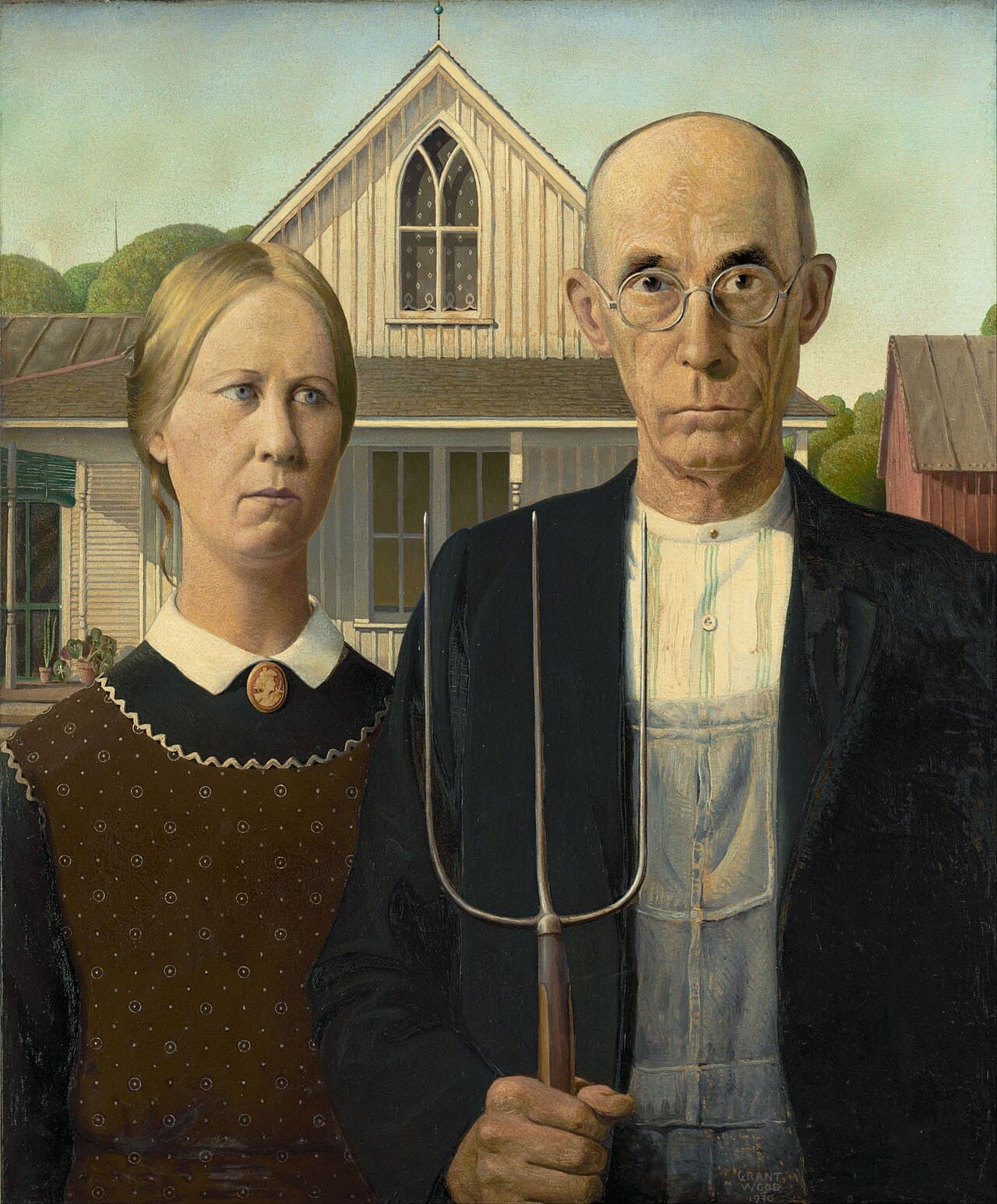
Grant Wood (1891–1942) was the best-known painter of Regionalism, depicting rural life in the American Midwest. American Gothic (1930) is one of the most parodied images in American art.
Last updated: · Iconica Society editors
Life
Born on a farm in Iowa, he spent most of his life there. He travelled to Europe several times in the 1920s; the crisp, detailed style of the Flemish and German Renaissance masters he saw in Munich in 1928 transformed his own painting.
Style and key works
Wood painted the American countryside in simple, orderly, almost toy-like forms. American Gothic shows a farmer and his daughter in front of a house with a Gothic window in Eldon, Iowa; the models were the painter’s sister Nan and his dentist Byron McKeeby. In 1930 it won a prize in a competition at the Art Institute of Chicago, which bought it.
Key works
Shop Grant Wood posters →Frequently asked questions
Who are the people in American Gothic?
The models were Wood’s sister Nan Wood Graham and his dentist Byron McKeeby; Wood intended them as a farmer and his daughter.
What was Regionalism?
A 1930s American movement that painted the rural United States realistically, in contrast to the European avant-garde; Grant Wood, Thomas Hart Benton and John Steuart Curry were its leading figures.