Art Guide · Painters
Alphonse Mucha
1860–1939
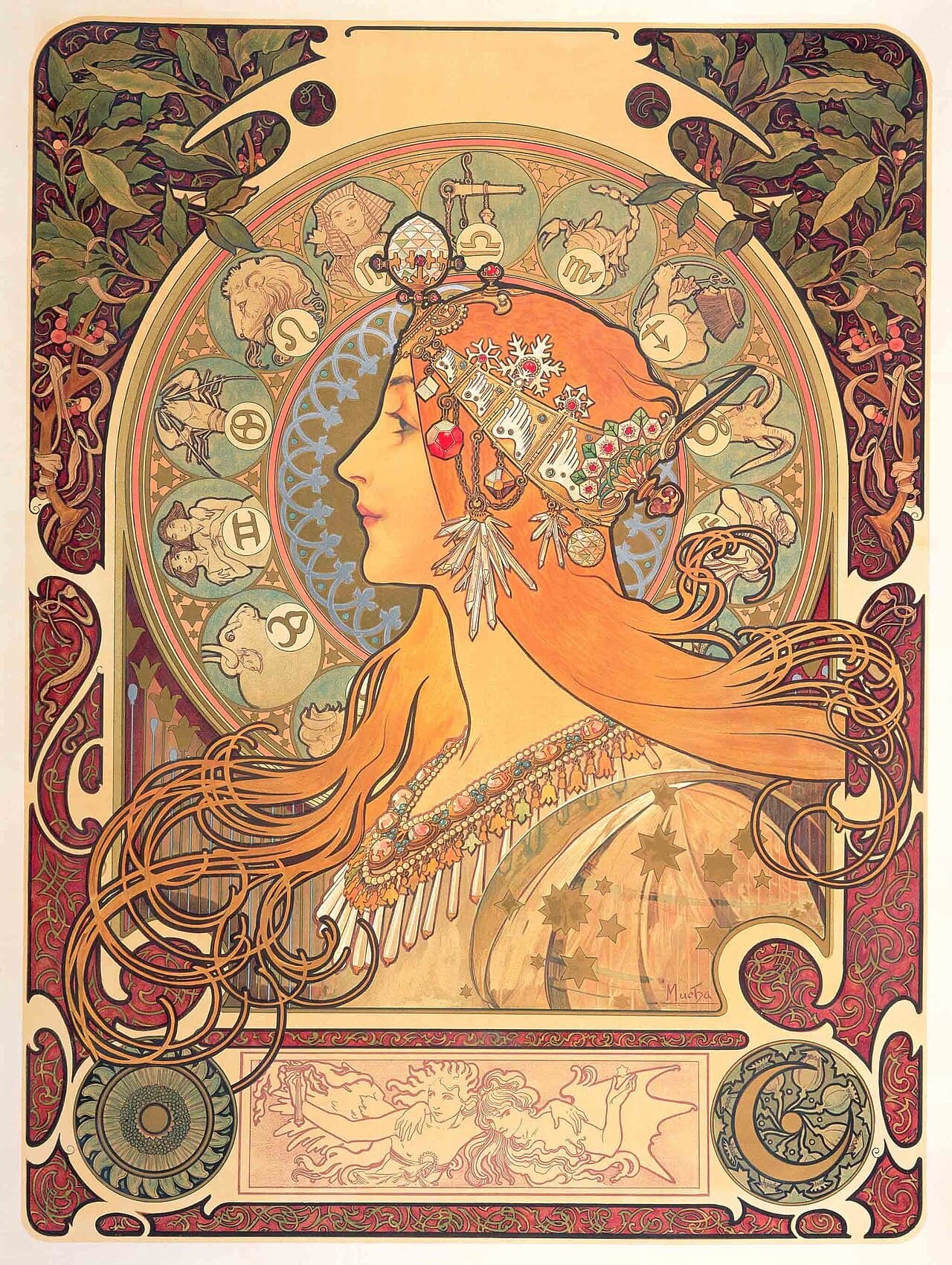
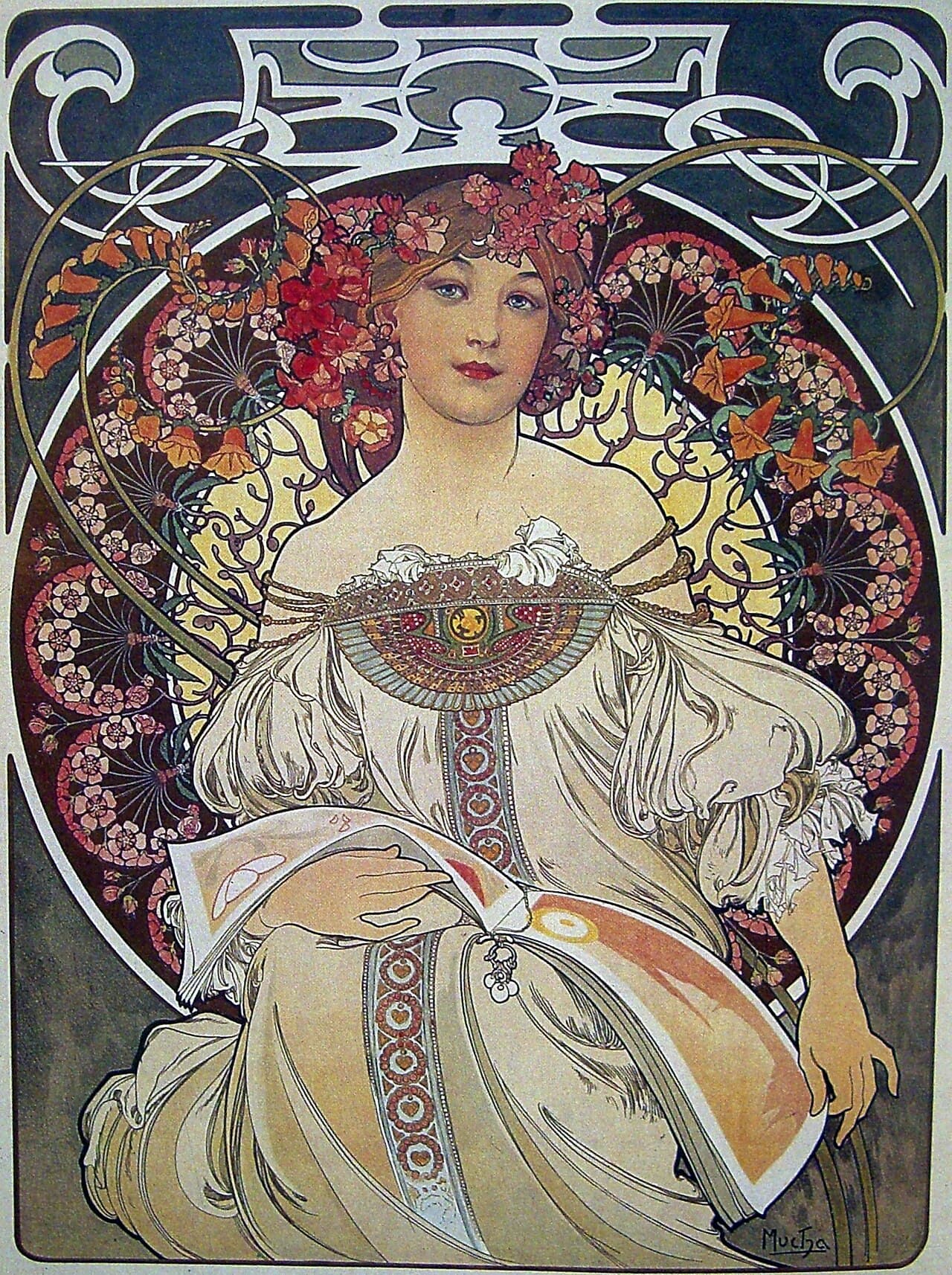
Alphonse Mucha (1860–1939) was the Czech artist whose Paris posters became the emblem of Art Nouveau. Long-haired women, floral motifs and circular frames make up the “Mucha style”.
Last updated: · Iconica Society editors
Life
He was born in Ivančice, Moravia. After working for a theatre-scenery firm in Vienna and studying in Munich, he went to Paris in 1887 and earned his living for years with magazine and book illustration.
At the end of 1894 an urgent commission, the poster for Sarah Bernhardt’s “Gismonda”, made him famous almost overnight; Bernhardt signed him to a six-year contract.
In 1910 he returned home and spent some 18 years on the Slav Epic, twenty huge canvases telling the history of the Slavic peoples. After the Nazi occupation in 1939 he was interrogated by the Gestapo and died in Prague shortly afterwards.
The Mucha style
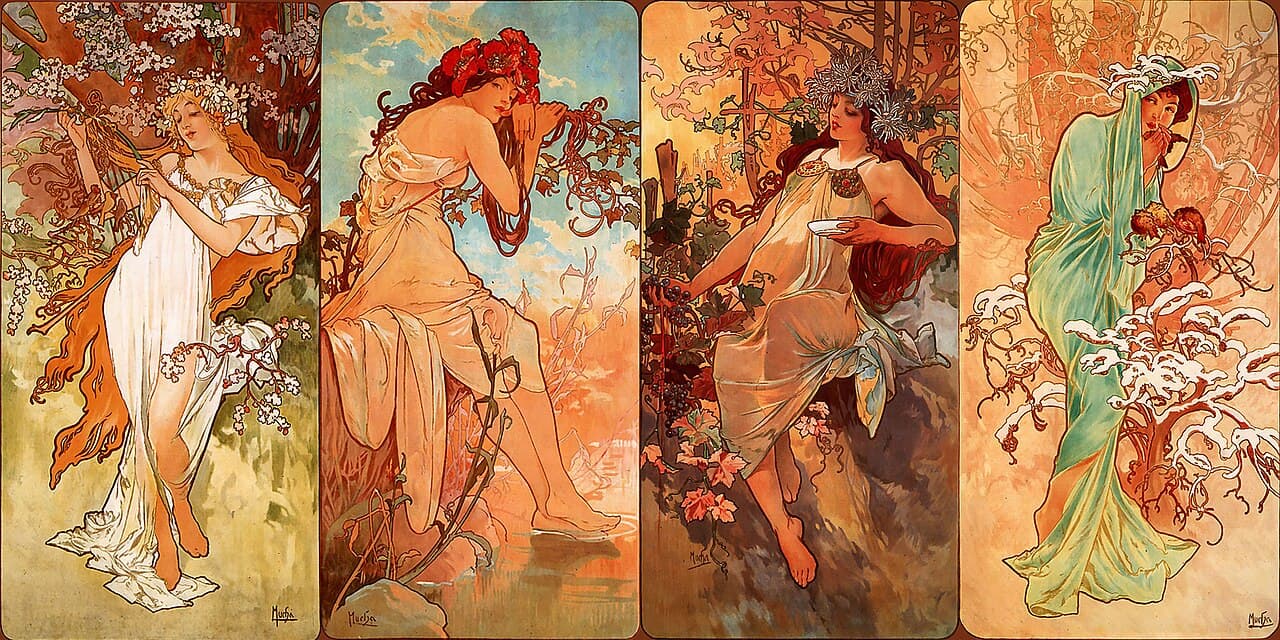
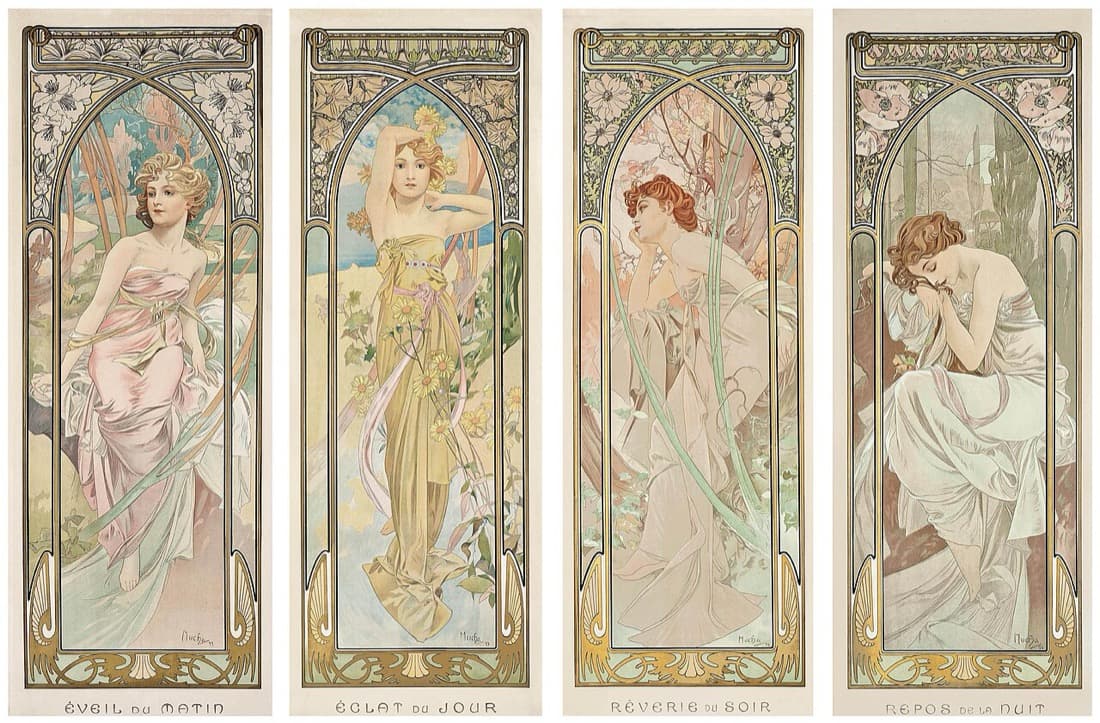
Pastel tones, flowing lines, botanical ornament and the halo-like circle behind the female figure make Mucha’s posters recognisable at a glance. The advertisement for Job cigarette papers (1896) and decorative panels such as The Seasons and Zodiac are the best-loved examples; the panels were designed from the start to be printed as wall decoration.
Key works
Shop Alphonse Mucha posters →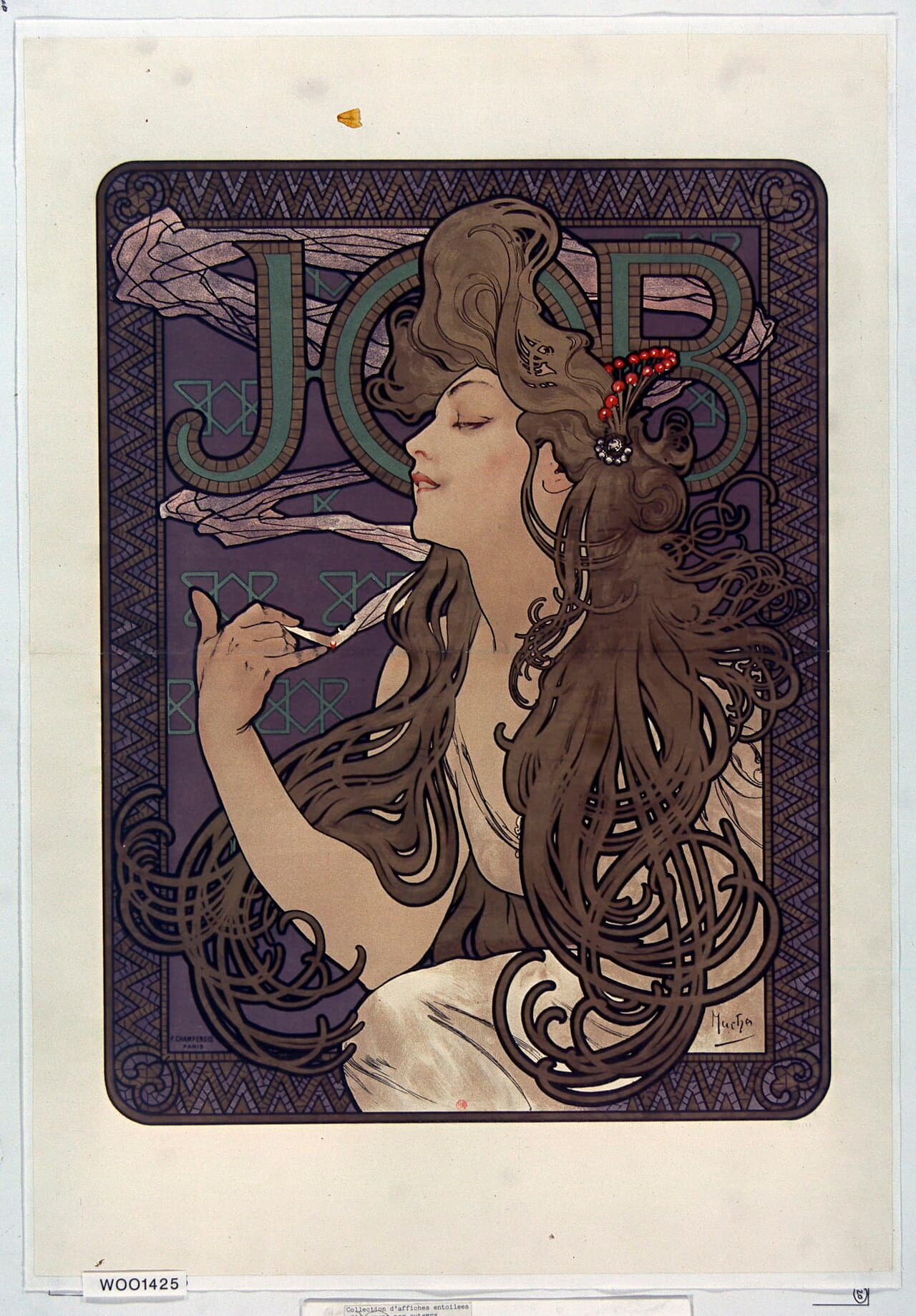
Frequently asked questions
Which work made Mucha famous?
The theatre poster for Sarah Bernhardt’s “Gismonda”, designed at the end of 1894.
Which movement does Mucha belong to?
Art Nouveau; in France the style was sometimes simply called “le style Mucha”.