Art Guide · Painters
Ernst Haeckel
1834–1919
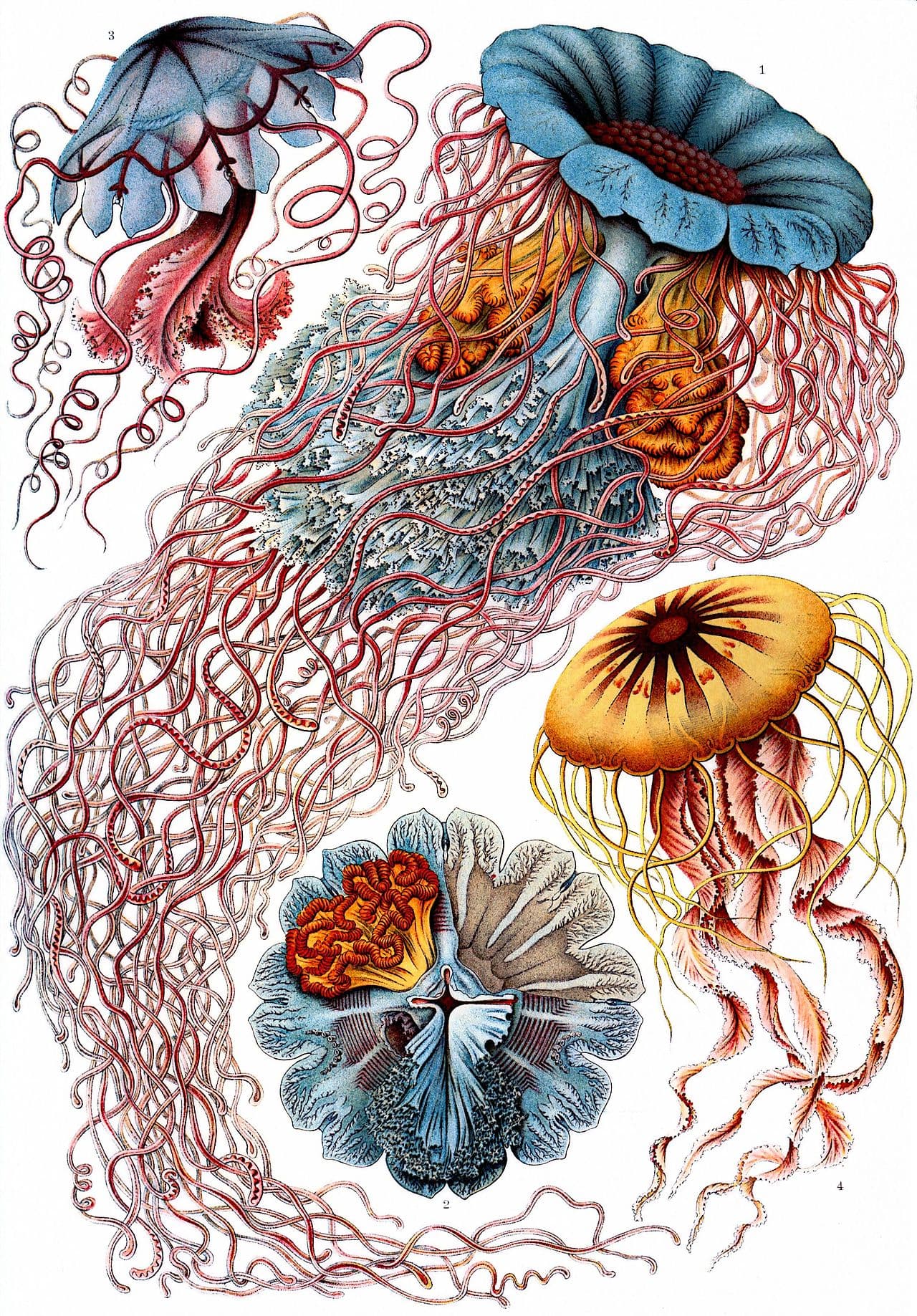
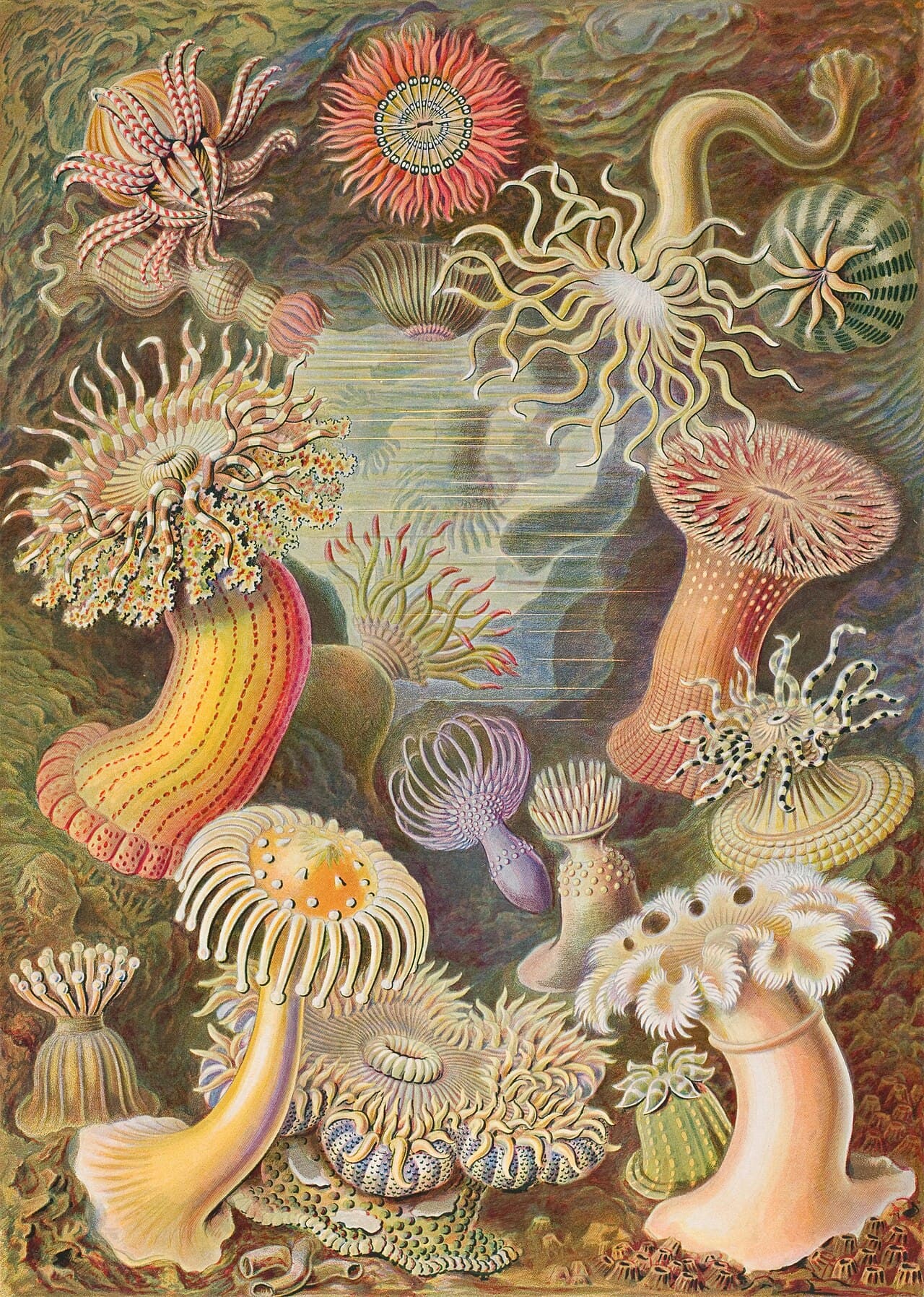
Ernst Haeckel (1834–1919) was a German zoologist and artist. The plates of jellyfish, corals and microscopic organisms in his book “Art Forms in Nature” influenced Art Nouveau and are among the best-loved scientific illustrations today.
Last updated: · Iconica Society editors
Life
Born in Potsdam, he studied medicine and spent most of his career as professor of zoology at the University of Jena. He popularised Darwin’s theory of evolution in Germany and coined terms still used today, such as “ecology”.
His scientific legacy is complex: some of his embryo drawings were criticised as exaggerated, and his views on race are now regarded as unacceptable.
Style and key works
Art Forms in Nature (Kunstformen der Natur, 1899–1904) presents jellyfish, radiolarians, hummingbirds and many other organisms in symmetrical, ornamental compositions across 100 plates. The book directly inspired the Art Nouveau designers and architects of the day.
Key works
Shop Ernst Haeckel posters →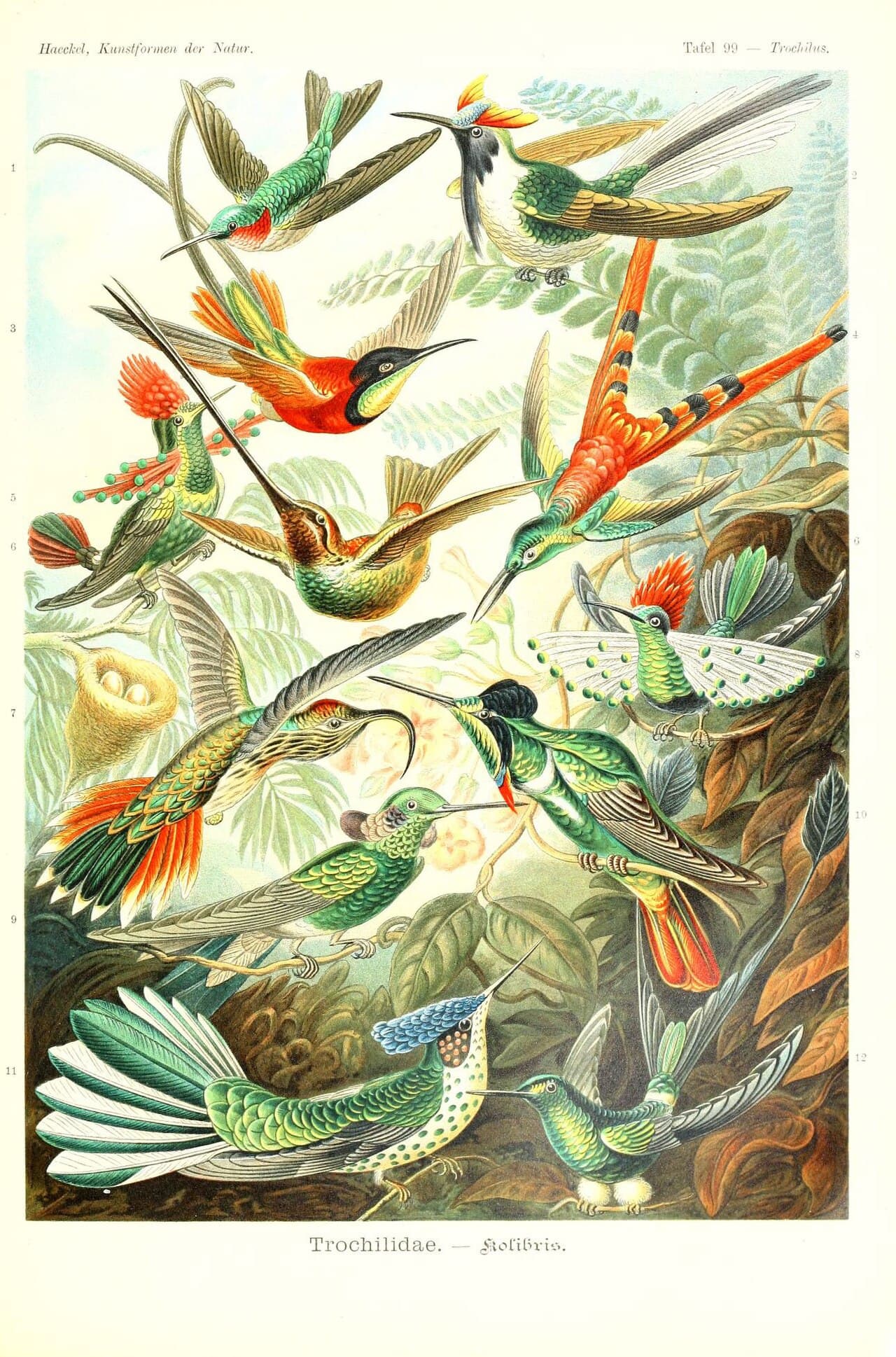
Frequently asked questions
How many plates are in Art Forms in Nature?
100 plates, published in ten instalments between 1899 and 1904.
How did Haeckel influence Art Nouveau?
The organic, symmetrical forms of his plates entered the ornamental vocabulary of designers and architects; the monumental entrance gate of the 1900 Paris World’s Fair, for example, was inspired by his radiolarian drawings.