Art Guide · Painters
Egon Schiele
1890–1918
Egon Schiele (1890–1918) is the best-known painter of Viennese Expressionism, with his sharp line, tense, contorted figures and intense self-portraits. He died of Spanish flu at 28.
Last updated: · Iconica Society editors
Life
Born in Tulln, he entered the Vienna Academy of Fine Arts at 16. He met Gustav Klimt, who championed him and introduced him to collectors. In 1912 he was briefly jailed over his frank nude drawings.
In 1918 he had a great success at the Vienna Secession exhibition. That autumn, in the Spanish flu pandemic, his pregnant wife Edith died, and he died three days later.
Style and key works
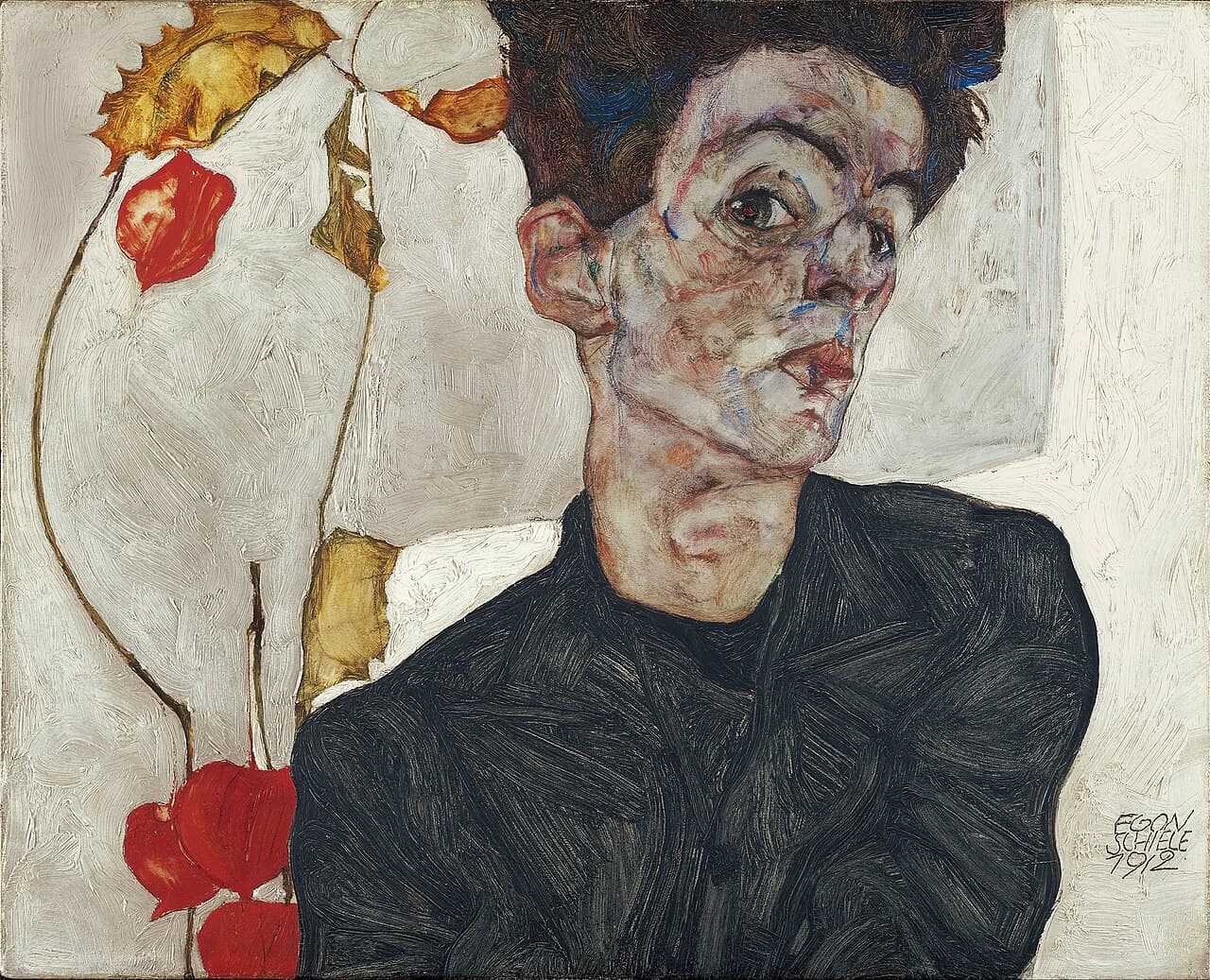
Schiele’s line is nervous and precise; his figures often stand in angular, strained poses against a bare ground. Self-Portrait with Physalis (1912) is his most famous self-portrait. In landscapes such as Four Trees (1917) he brings the same sensitivity to a calmer, rhythmic nature.
Key works
Shop Egon Schiele posters →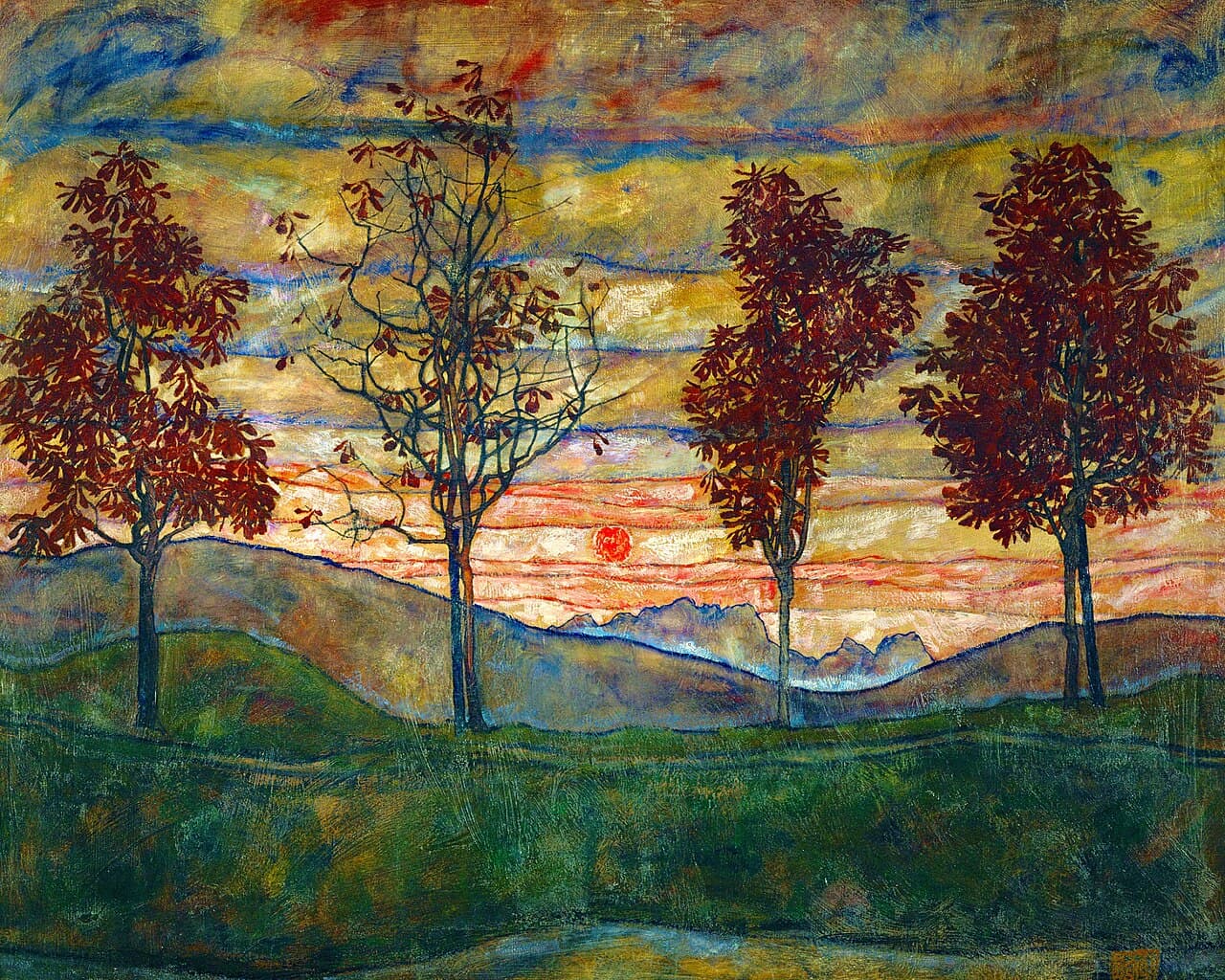
Frequently asked questions
What was Schiele’s relationship with Klimt?
Klimt was the young Schiele’s mentor and supporter, introducing him to models and collectors. Schiele started from Klimt’s decorative language and developed a far harsher, more expressive style.
Where can you see Schiele’s work?
The largest collection is at the Leopold Museum in Vienna; the Belvedere also holds important works.