Art Guide · Painters
Paul Cézanne
1839–1906
Paul Cézanne (1839–1906) was the French Post-Impressionist who rebuilt nature from planes of colour and geometric forms. Because he opened the way to Cubism and modern painting, he is often called “the father of modern art”.
Last updated: · Iconica Society editors
Life
The son of a wealthy banker in Aix-en-Provence, he grew up with the writer Émile Zola as a childhood friend. He studied law at his father’s wish, then went to Paris to become a painter. He worked outdoors with Pissarro and showed at the first Impressionist exhibition, but his work was long ridiculed.
He spent most of his life in Provence in relative isolation and was discovered by a younger generation only in his last years, after his first solo exhibition in 1895. He died in 1906, after being caught in a storm while painting outdoors.
Style and key works
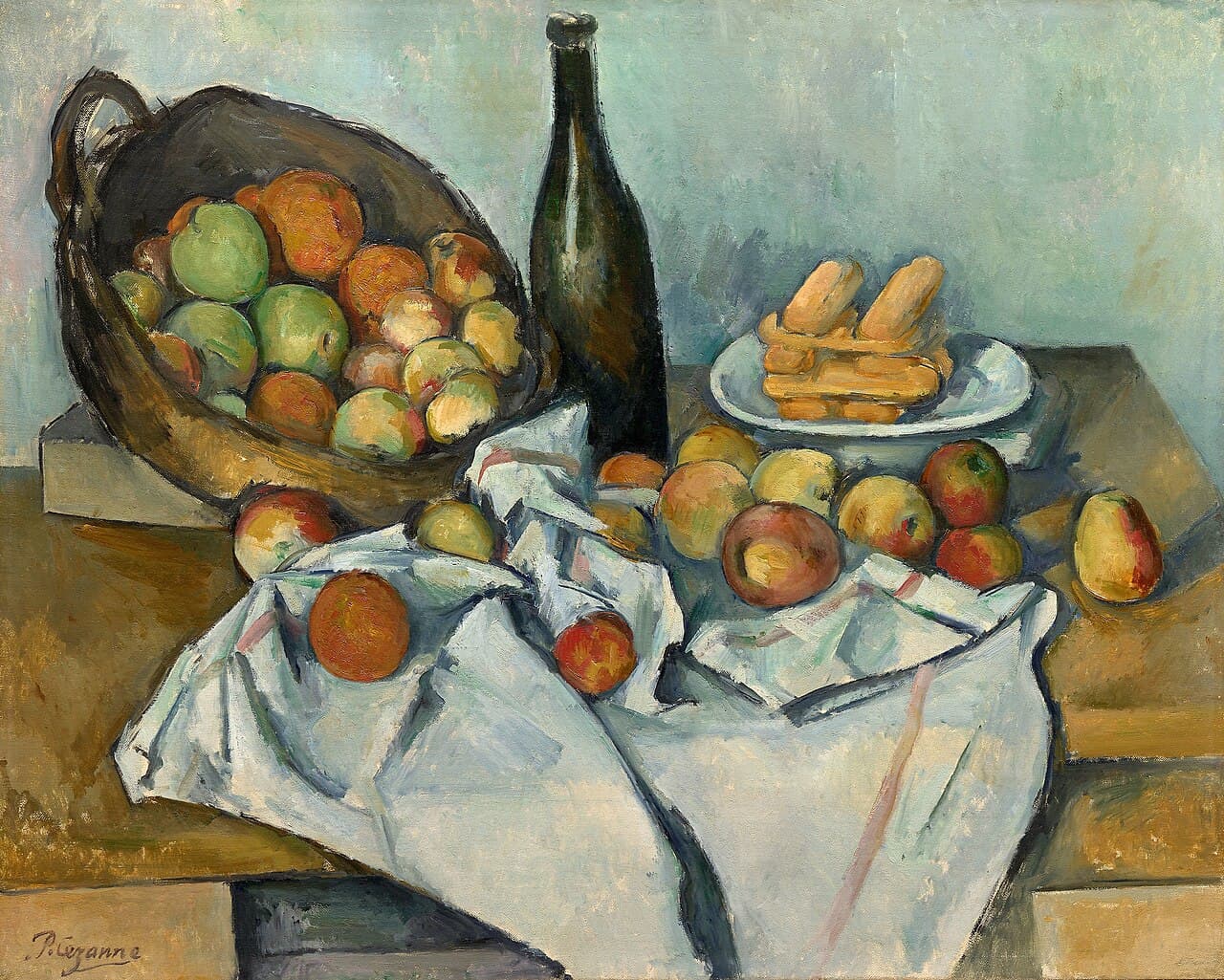
Cézanne said he wanted to make of Impressionism “something solid and durable, like the art of the museums”. He treated nature in terms of basic shapes such as the cylinder, the sphere and the cone, and showed objects from more than one viewpoint. He painted Mont Sainte-Victoire dozens of times; the Card Players series of five paintings and still lifes such as The Basket of Apples are among his best-known works.
Key works
Shop Paul Cézanne posters →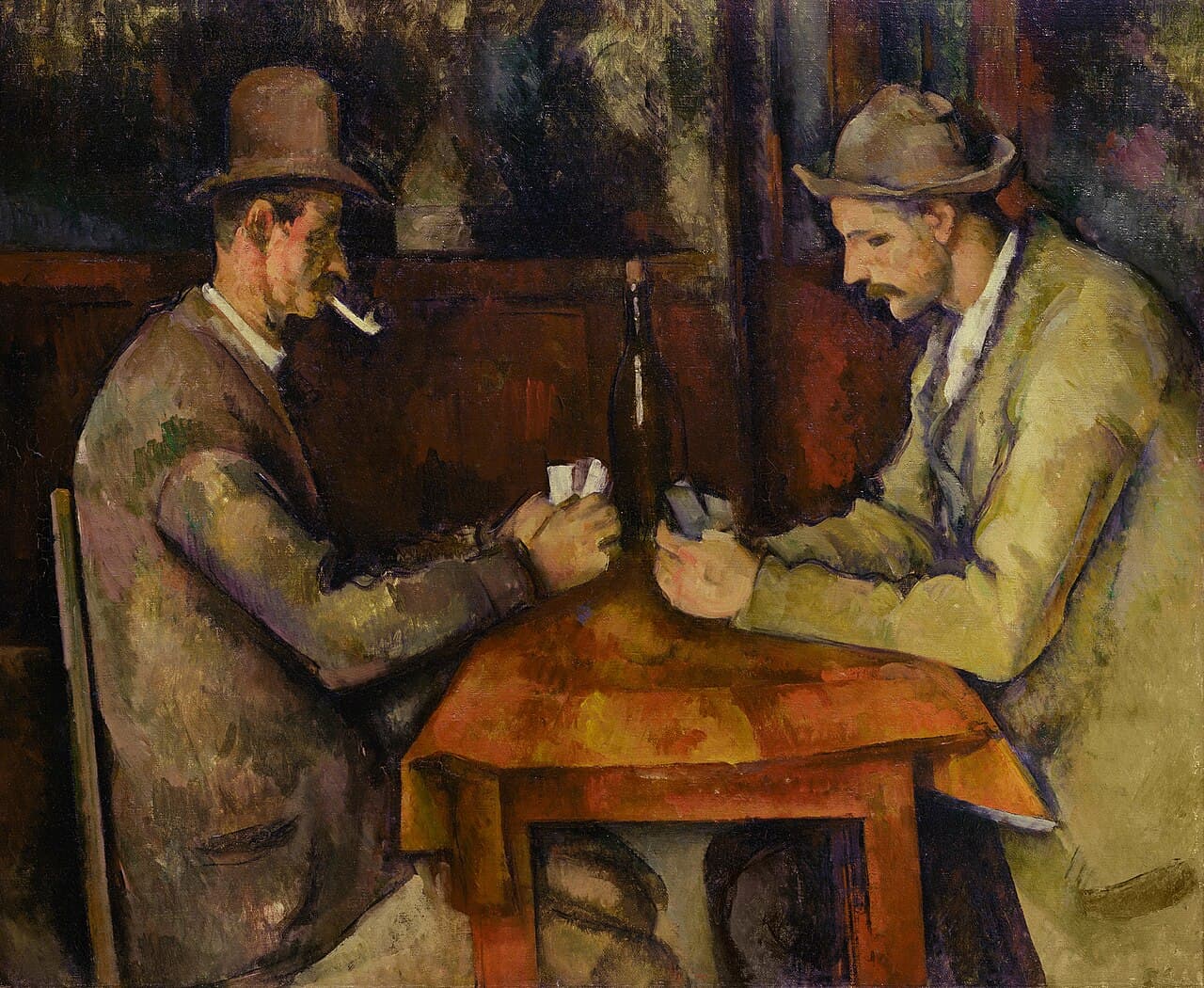
Frequently asked questions
Why is Cézanne called the father of modern art?
Rebuilding nature from geometric forms and multiple viewpoints directly inspired Picasso and Braque’s Cubism.
Where is Mont Sainte-Victoire?
In southern France, east of Aix-en-Provence, Cézanne’s home town; he painted it again and again from his studio and the surrounding countryside.