Art Guide · Painters
Paul Gauguin
1848–1903
Paul Gauguin (1848–1903) was a French Post-Impressionist known for flat areas of warm colour, symbolic imagery and the paintings he made in Tahiti.
Last updated: · Iconica Society editors
Life
He spent part of his childhood in Peru, worked as a sailor and then as a stockbroker in Paris, painting at weekends. After the 1882 stock-market crash he devoted himself to art. He worked at Pont-Aven in Brittany and in 1888 lived with Van Gogh in Arles for nine weeks.
In 1891 he left for Tahiti in French Polynesia in search of a life away from European civilisation. He spent his final years in the Marquesas Islands, where he died in 1903.
Style and key works
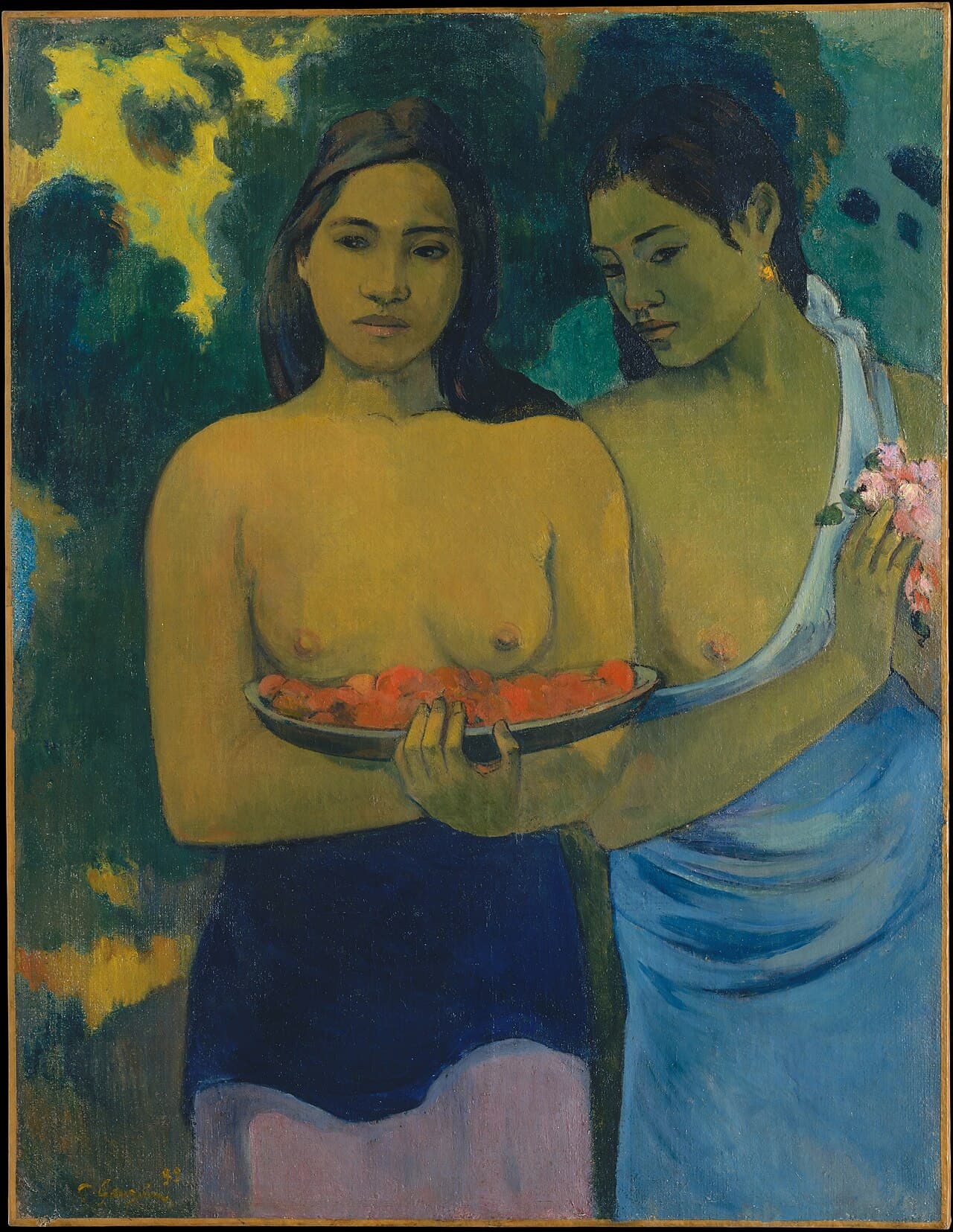
Rather than copying nature, Gauguin used flat colour, bold outlines and symbols to convey feeling and ideas. Two Tahitian Women (1899) and Where Do We Come From? What Are We? Where Are We Going? (1897–98) are among his best-known works. His liberation of colour influenced the Fauves and much of 20th-century painting. Today his life in Tahiti is also viewed critically in light of colonialism and his relationships with young women there.
Key works
Shop Paul Gauguin posters →Frequently asked questions
Why did Gauguin go to Tahiti?
He went in 1891 looking for a life he imagined as simpler and more natural, away from European civilisation, and for a new pictorial language.
What happened between Gauguin and Van Gogh?
They lived together in the Yellow House in Arles for nine weeks in 1888; growing tension ended with Van Gogh’s crisis in December 1888, after which Gauguin returned to Paris.