Art Guide · Painters
Utagawa Hiroshige
1797–1858
Utagawa Hiroshige (1797–1858) was the last great landscape master of ukiyo-e, known for The Fifty-three Stations of the Tōkaidō and One Hundred Famous Views of Edo; he directly influenced Van Gogh.
Last updated: · Iconica Society editors
Life
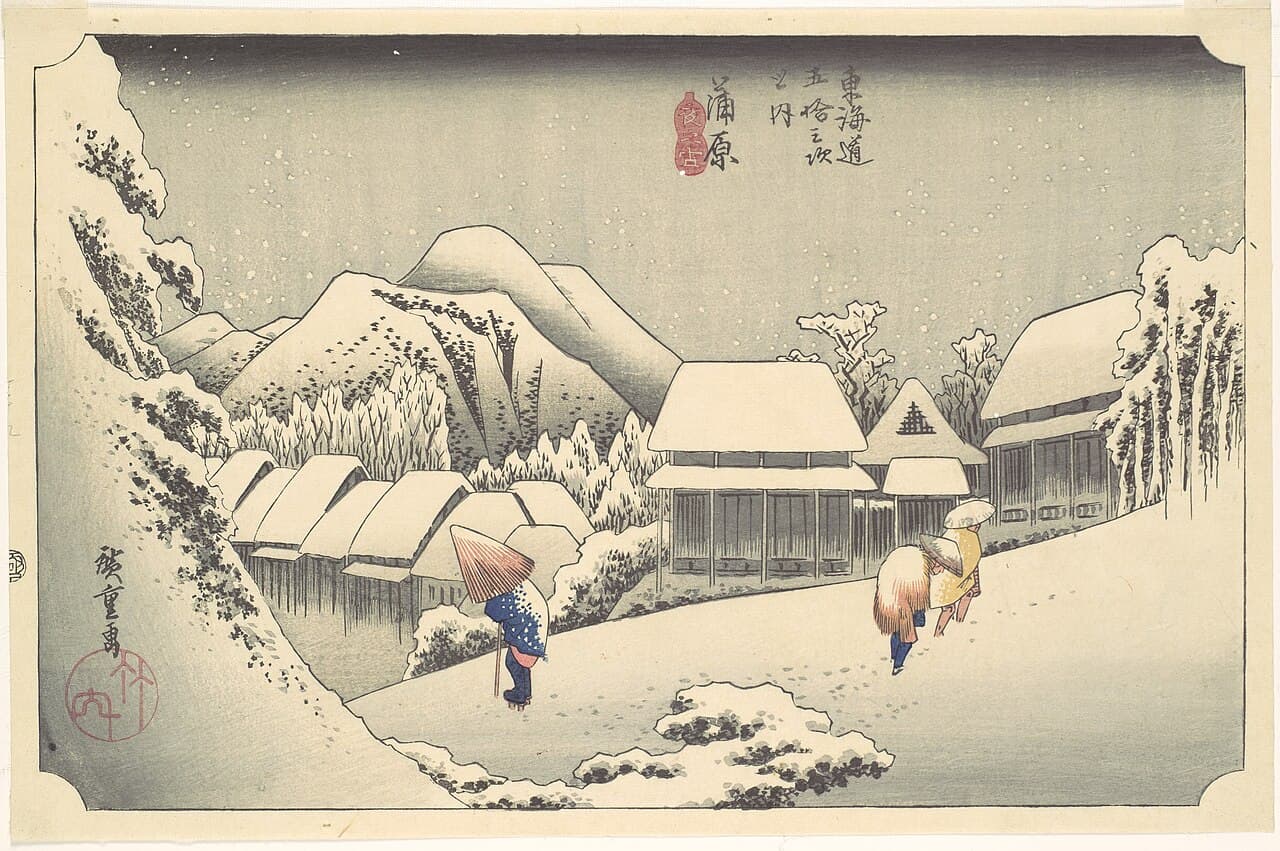
Born in Edo into a family of samurai fire wardens, he inherited his father’s post. As a youth he studied under Utagawa Toyohiro. His series The Fifty-three Stations of the Tōkaidō, published in 1833–34, depicting the main road between Edo and Kyoto, made him famous.
Style and key works
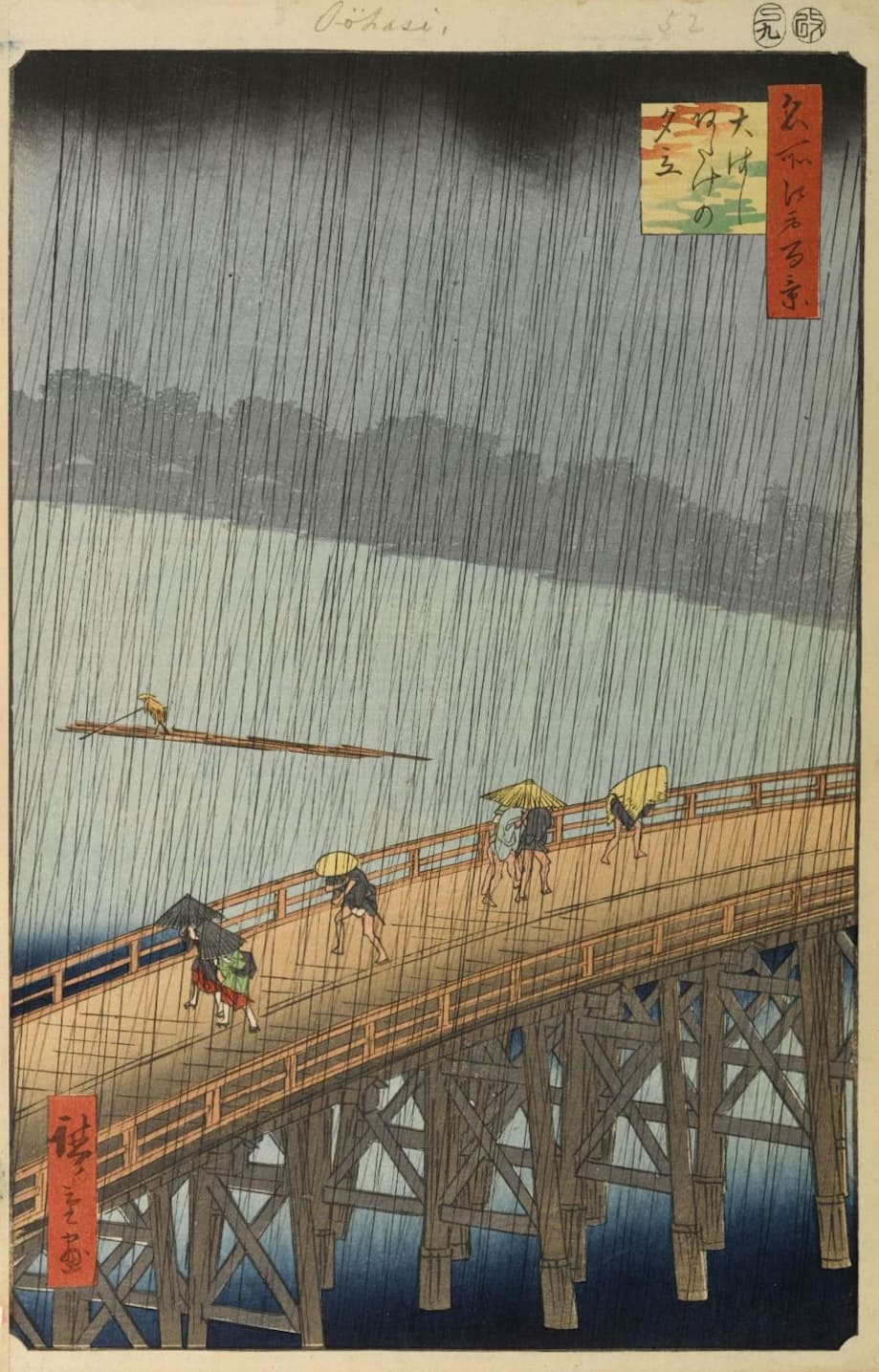
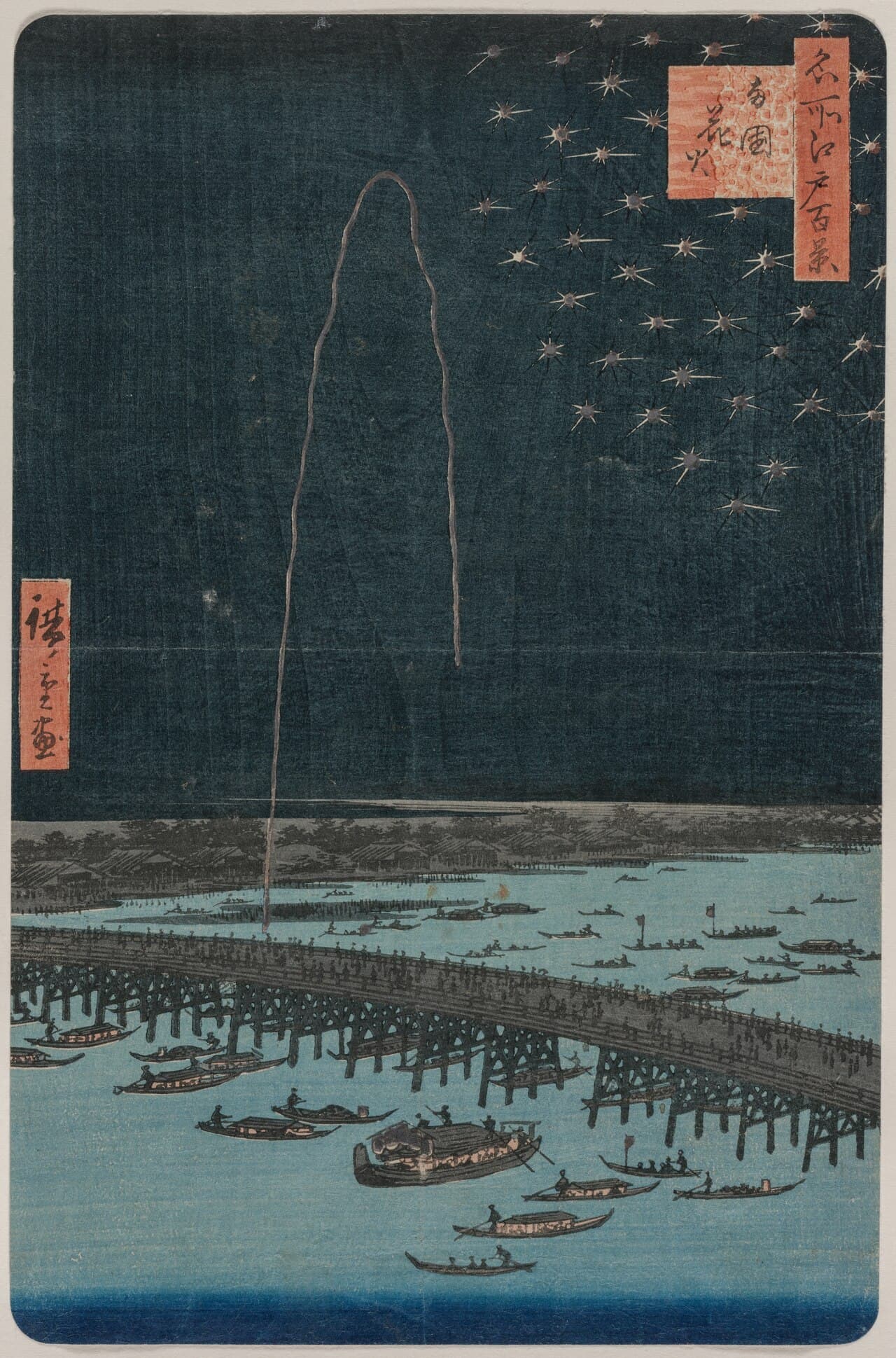
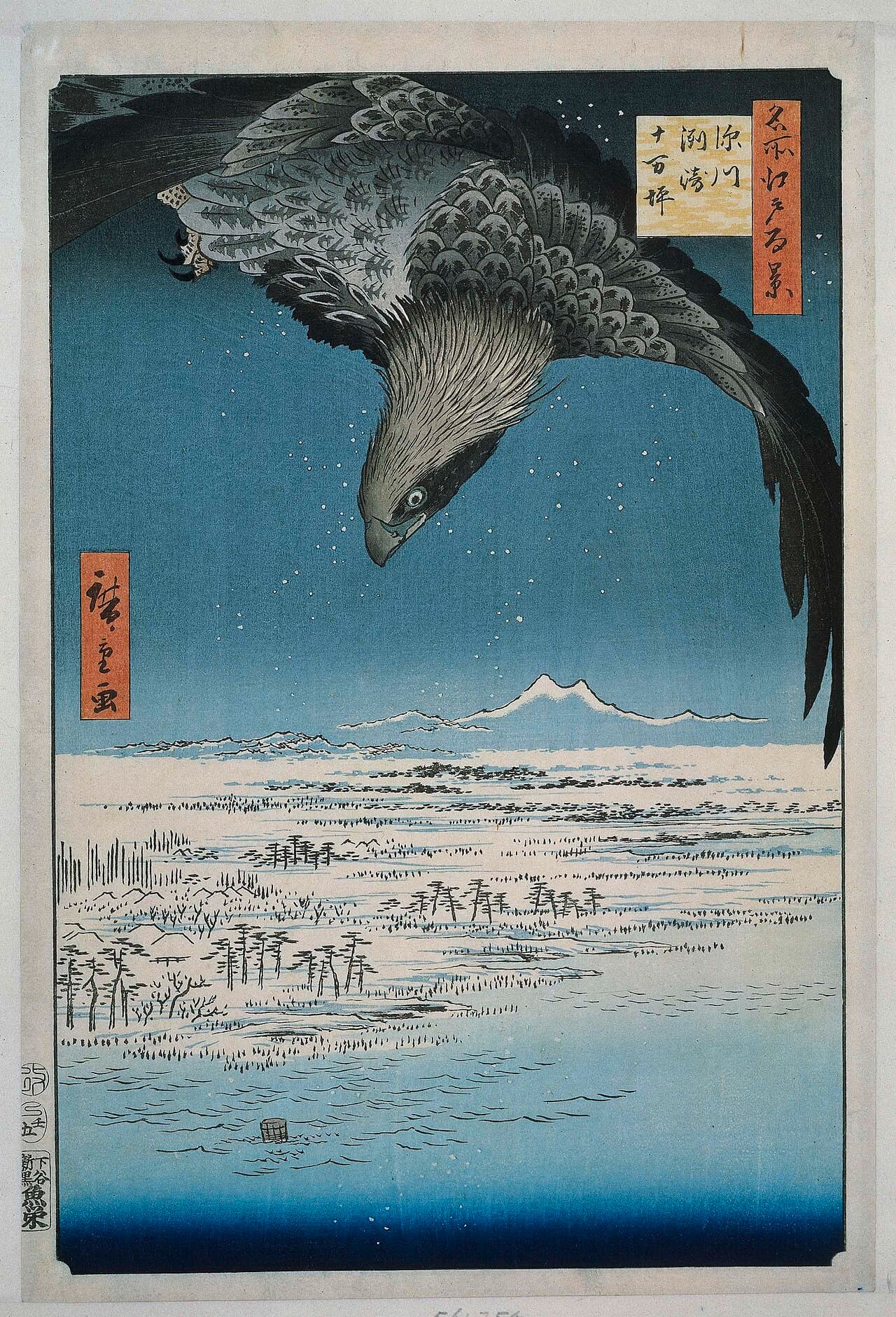
Hiroshige’s landscapes capture rain, snow, mist and moonlight with poetic sensitivity. One Hundred Famous Views of Edo (1856–58), made in his last years, stands out for bold vertical framing and large foreground motifs. In 1887 Van Gogh copied two prints from the series, Plum Park in Kameido and Sudden Shower over Shin-Ōhashi Bridge, in oil.
Key works
Shop Utagawa Hiroshige posters →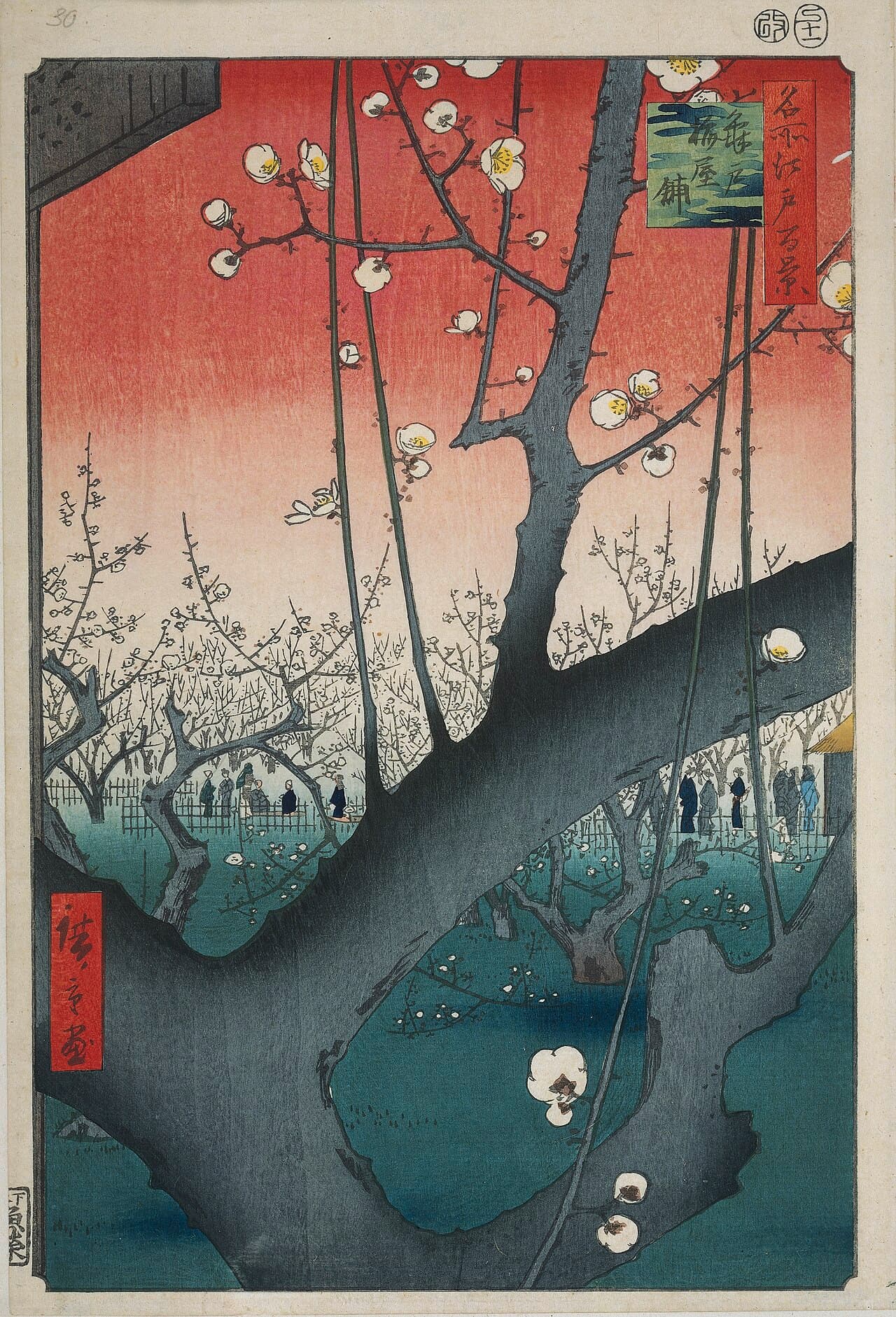
Frequently asked questions
How do Hiroshige and Hokusai differ?
Hokusai’s landscapes are more dramatic and dynamic, Hiroshige’s more poetic and atmospheric; they are the two great masters of the ukiyo-e landscape print.
How was Van Gogh influenced by Hiroshige?
A keen collector of Japanese prints, Van Gogh copied two of Hiroshige’s prints in oil in 1887 and absorbed his flat colour and bold framing into his own painting.