Art Guide · Art movements
Ukiyo-e
Edo period
Ukiyo-e, “pictures of the floating world”, is the Japanese tradition of woodblock prints and paintings that flourished in the Edo period (17th–19th centuries). The landscape prints of Hokusai and Hiroshige deeply influenced 19th-century European art.
Last updated: · Iconica Society editors
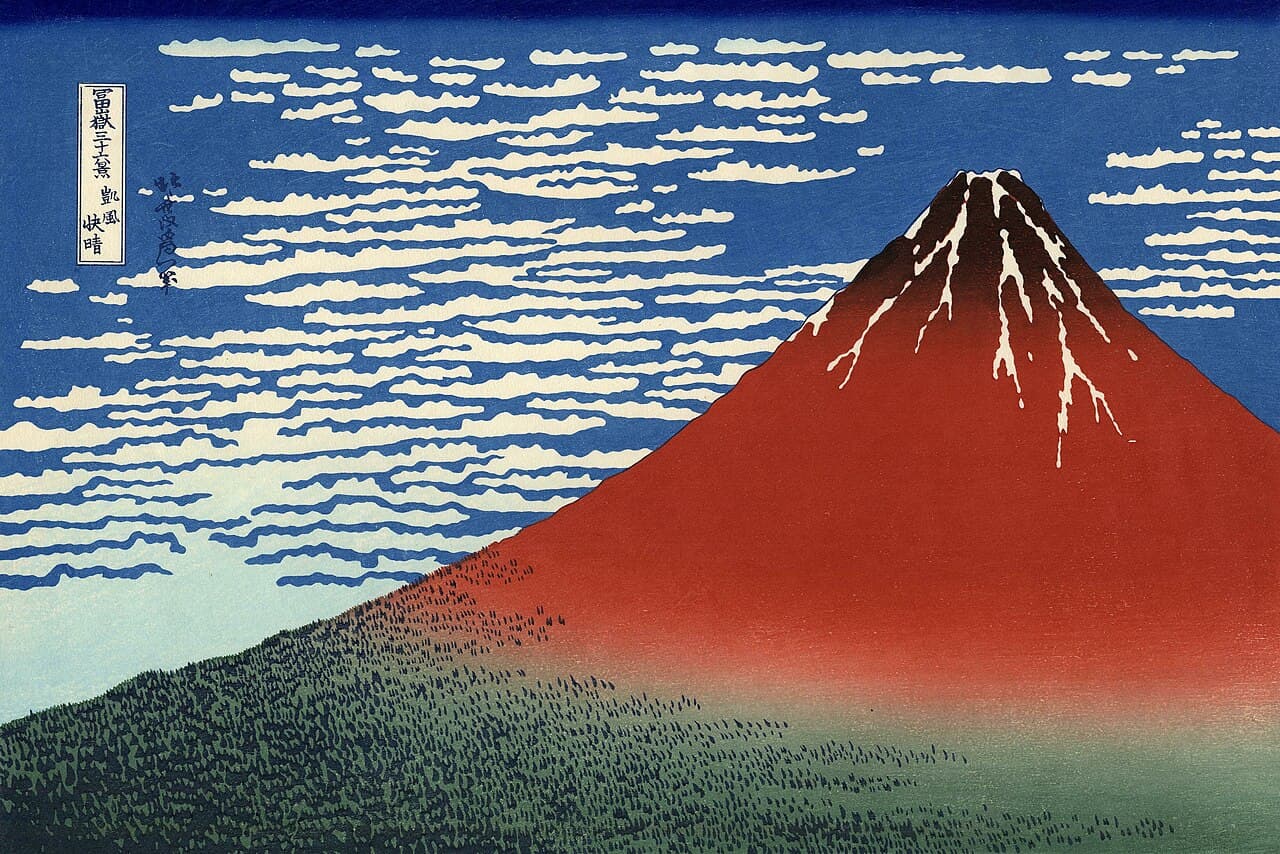
How were they made?
A ukiyo-e print was a team effort: the artist drew the design, the carver cut a separate woodblock for each colour, the printer pressed the blocks onto paper in sequence and the publisher ran production and sales. This made prints plentiful and affordable, collected by ordinary townspeople.
Subjects and influence on Europe
At first kabuki actors and beautiful women were the favourite subjects; in the 19th century landscape came to the fore with Hokusai’s Fuji series and Hiroshige’s views of Edo. When Japan opened to foreign trade in the 1850s, prints reaching Europe launched “Japonisme”: Van Gogh copied Hiroshige’s prints and Monet decorated his house at Giverny with Japanese prints.
Key works
Shop Ukiyo-e posters →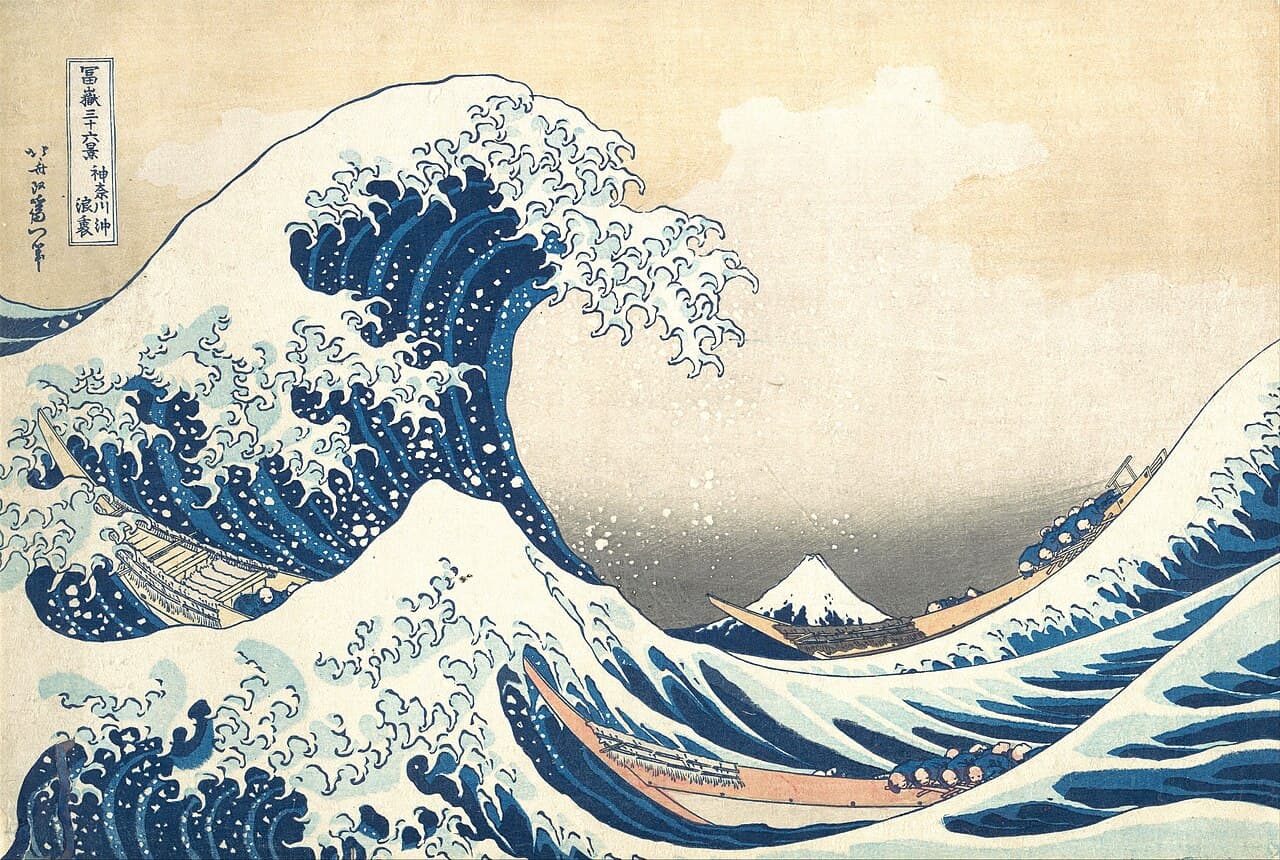
The Great Wave off KanagawaKatsushika Hokusai, c. 1831 Red FujiKatsushika Hokusai, c. 1831 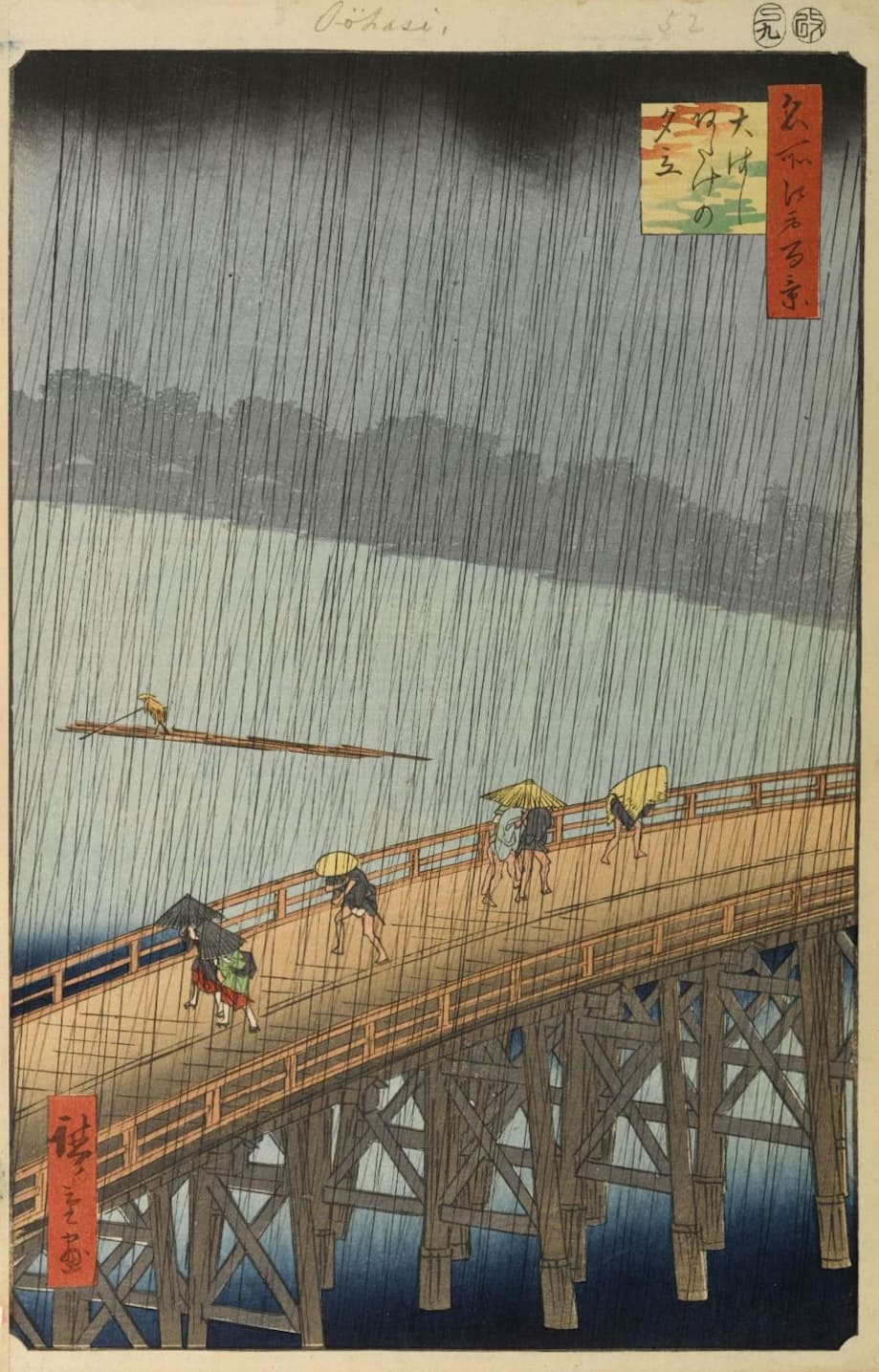
Sudden Shower over Shin-Ōhashi BridgeUtagawa Hiroshige, 1857 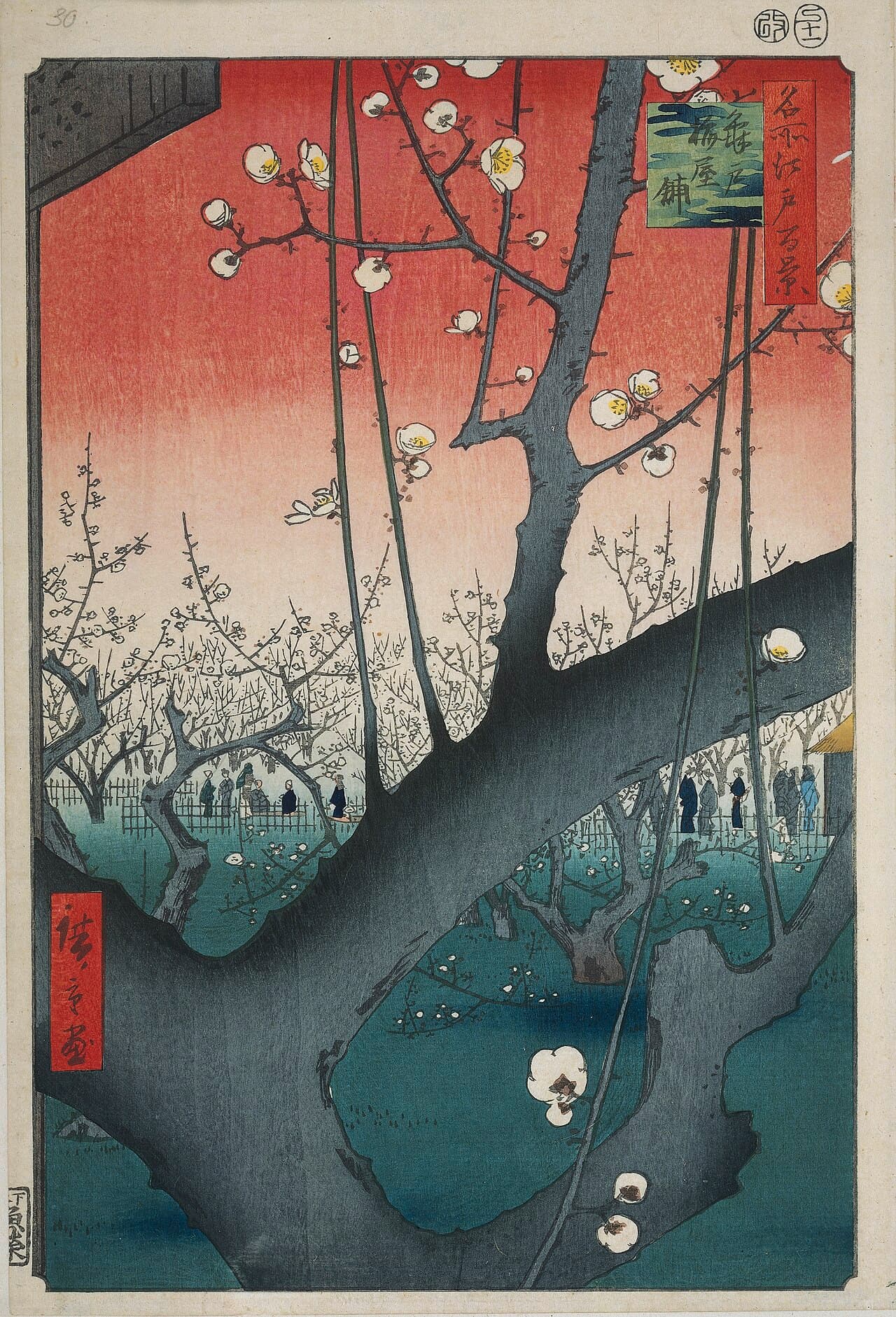
Plum Park in KameidoUtagawa Hiroshige, 1857 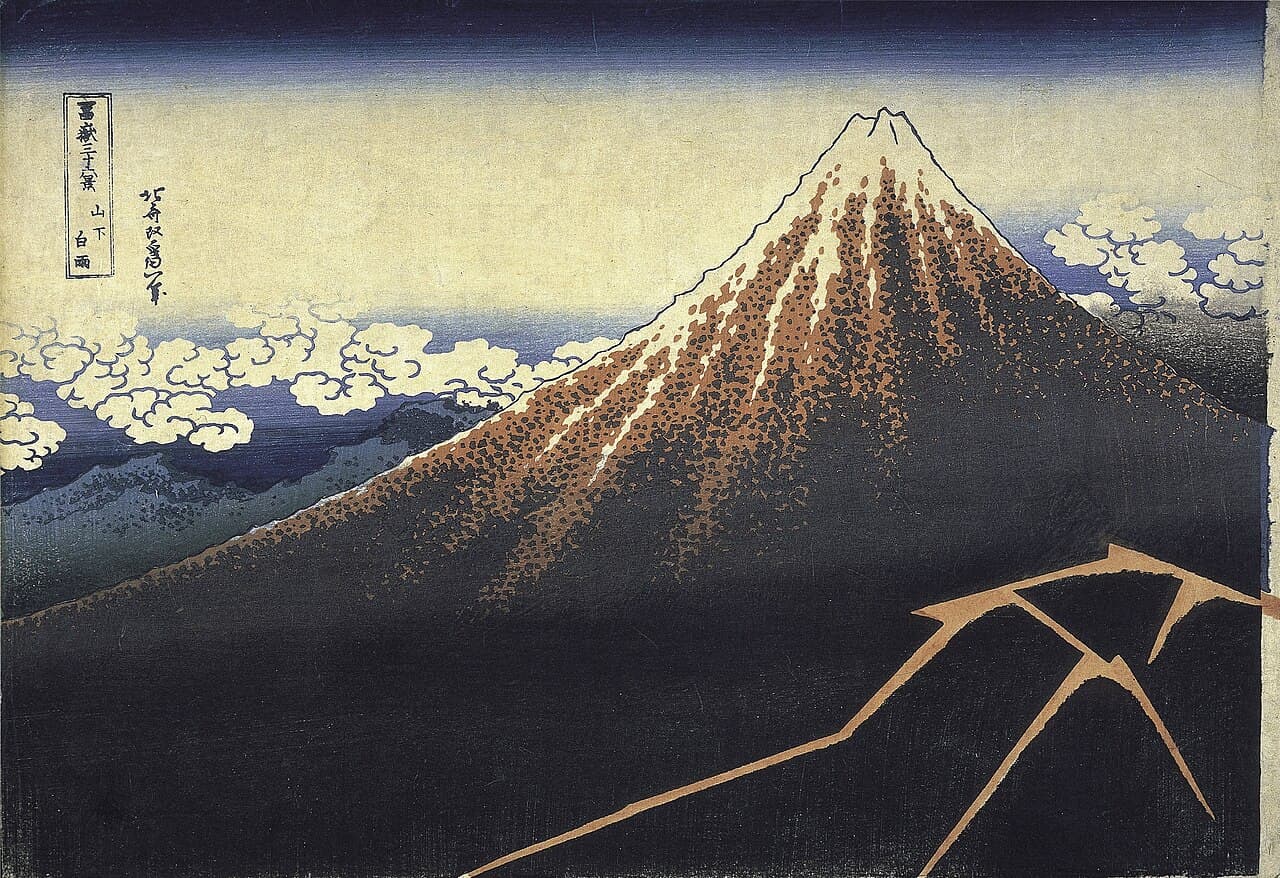
Rainstorm Beneath the SummitKatsushika Hokusai, c. 1831 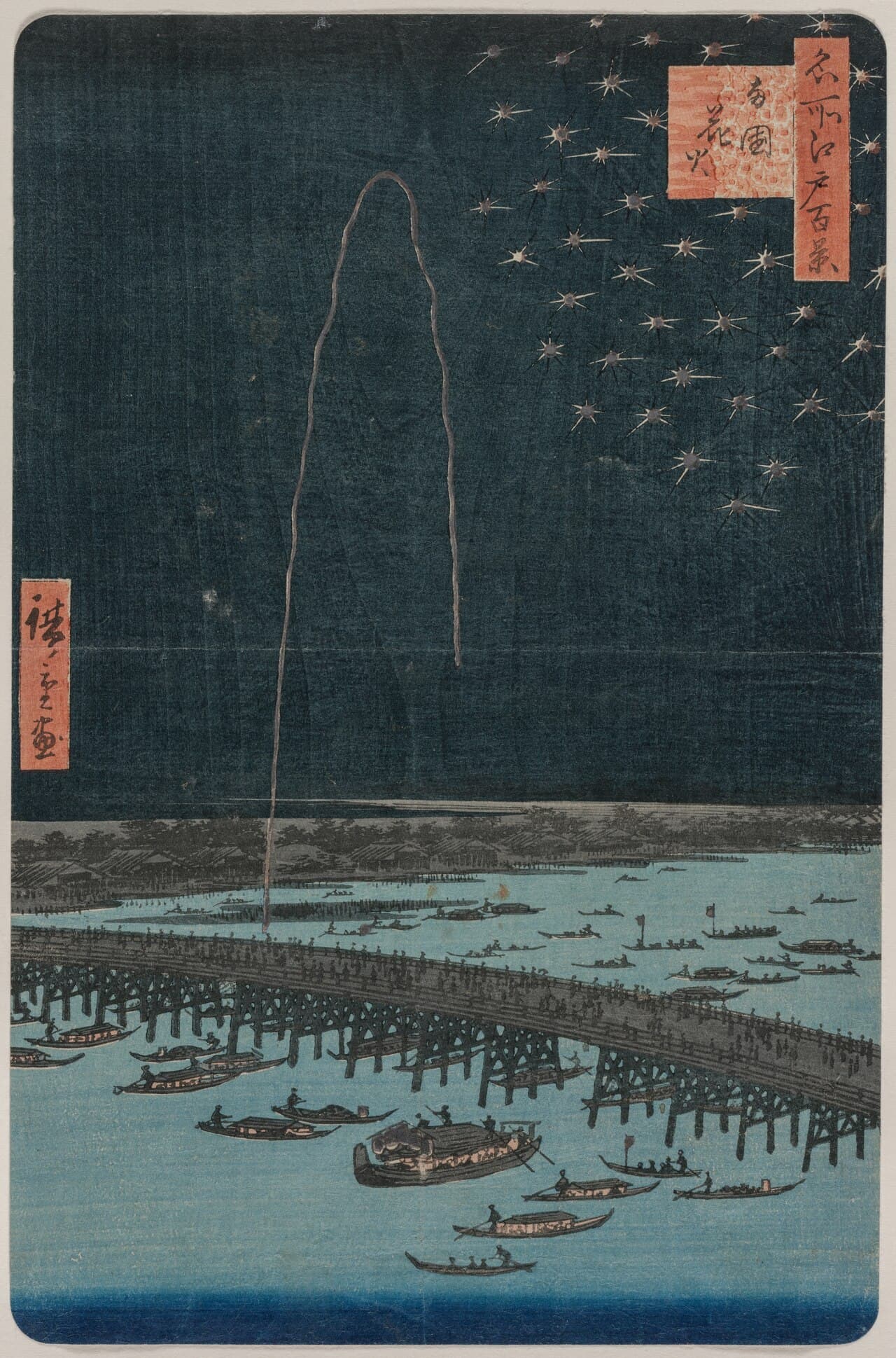
Fireworks at RyōgokuUtagawa Hiroshige, 1858 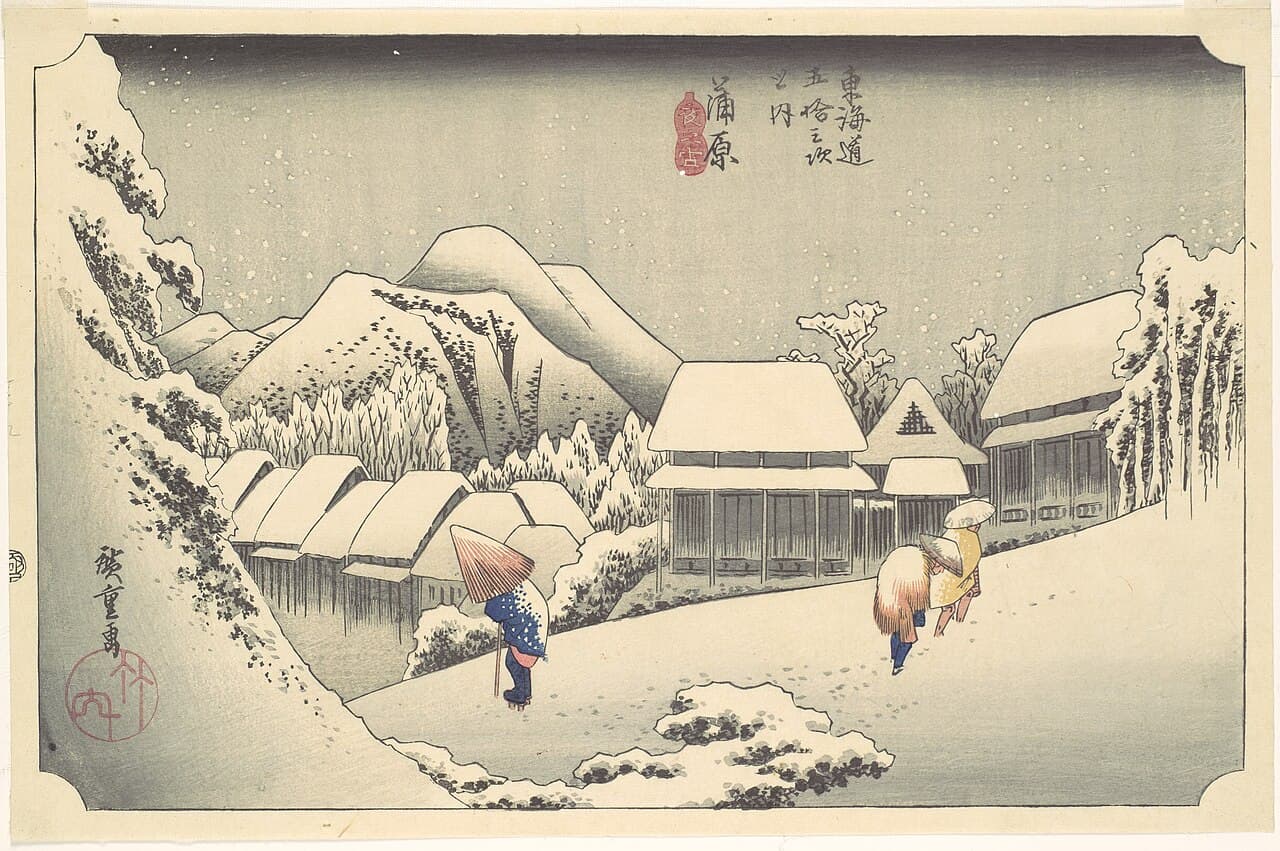
Evening Snow at KanbaraUtagawa Hiroshige, c. 1833–34 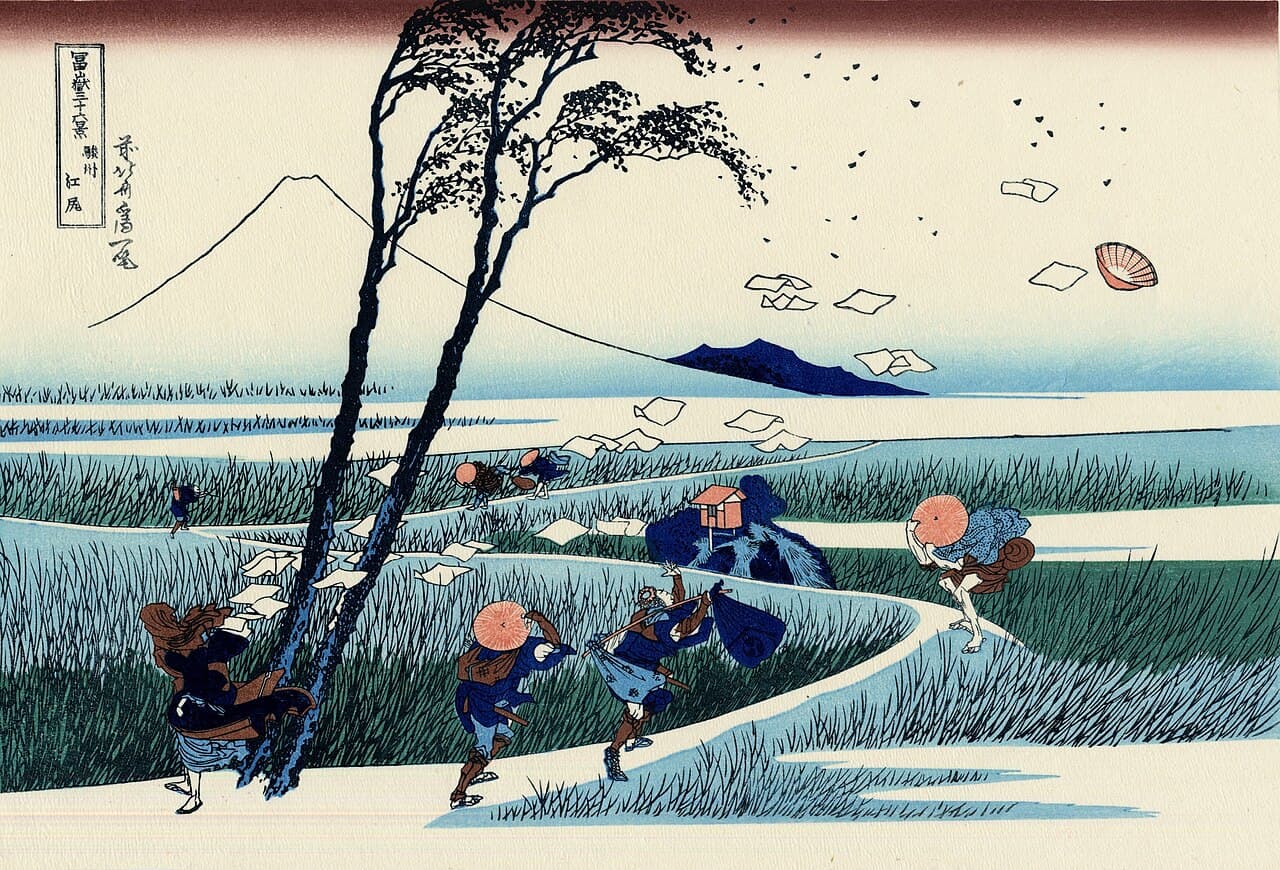
Ejiri in Suruga ProvinceKatsushika Hokusai, c. 1830–32