Art Guide · Painters
Wassily Kandinsky
1866–1944
Wassily Kandinsky (1866–1944) was a Russian painter and theorist and a pioneer of abstract painting. He thought of colour and form like music, co-founded the Blue Rider group and taught at the Bauhaus.
Last updated: · Iconica Society editors
Life
He studied law and economics in Moscow and taught at the university, then gave up an academic career at 30 to paint and moved to Munich. In 1911 he founded the Blue Rider (Der Blaue Reiter) with Franz Marc and published “Concerning the Spiritual in Art”.
He returned to Russia during the First World War, then taught at the Bauhaus in Germany from 1922 to 1933. When the Nazis closed the school he moved to the outskirts of Paris, where he died in 1944.
Style and key works
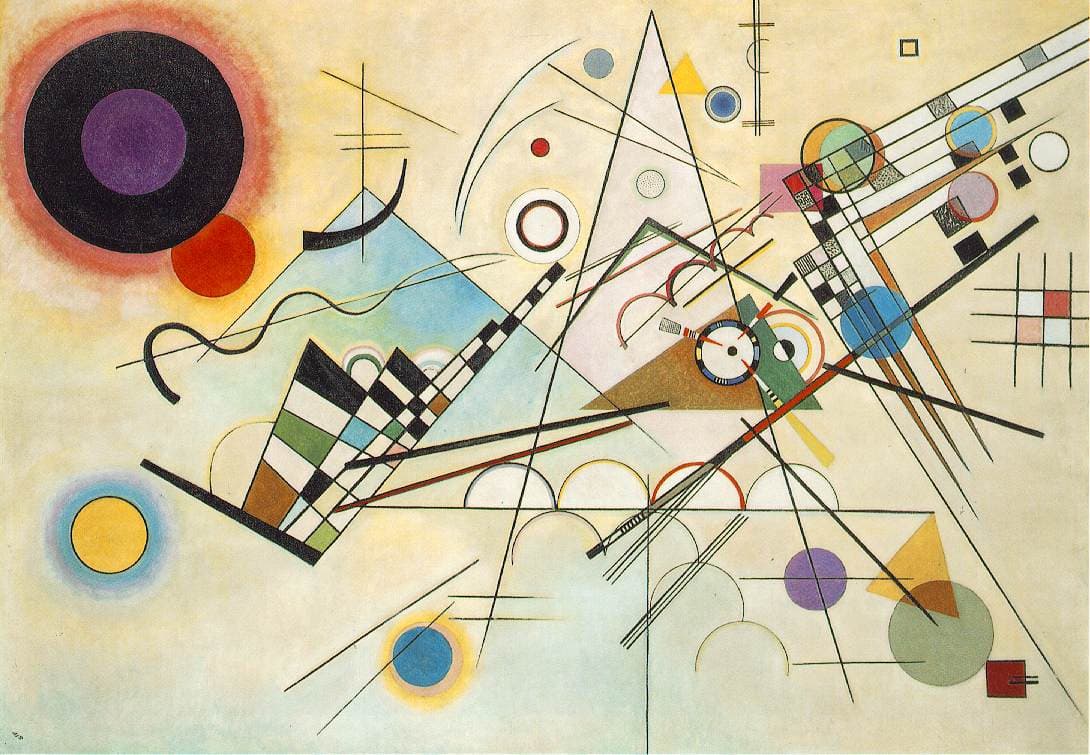
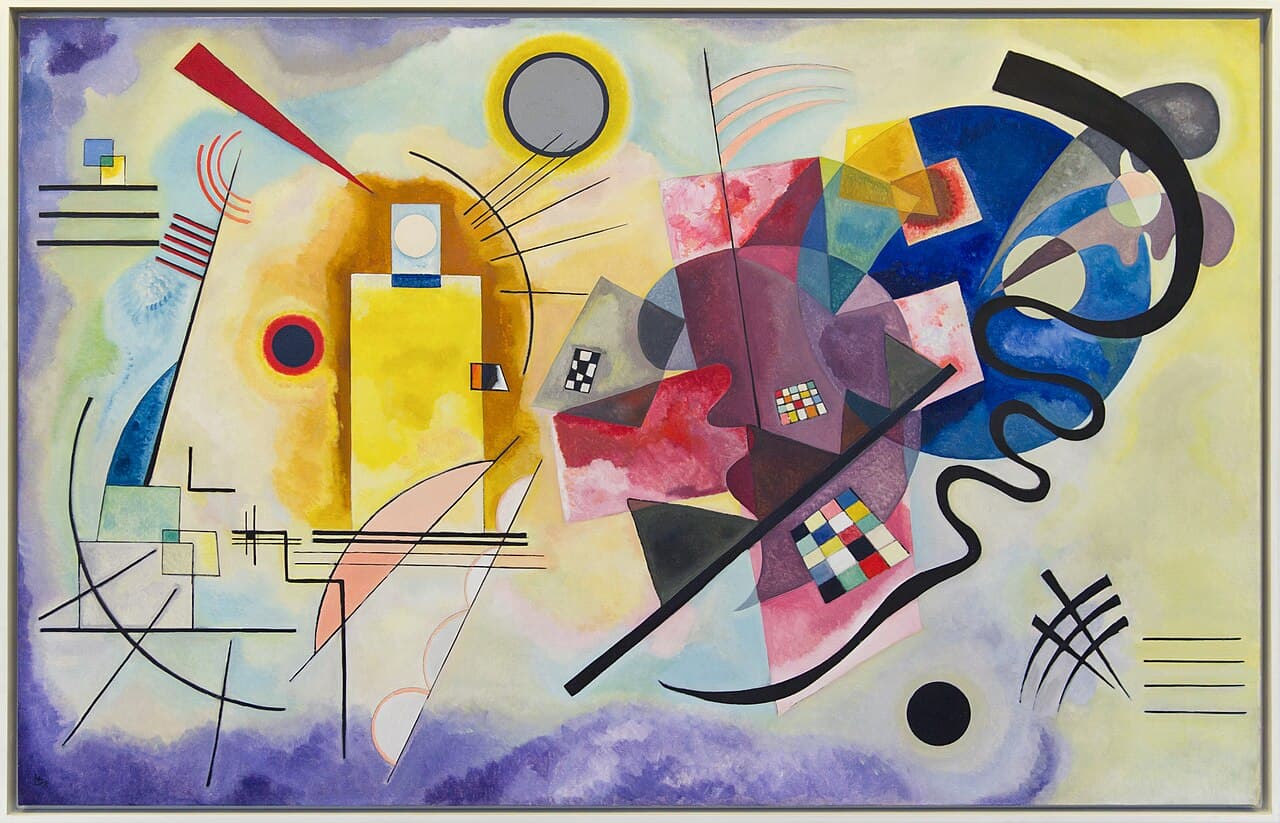
Kandinsky believed colours and forms could stir emotion without a subject, just like music, and often gave his works musical titles such as “Composition” and “Improvisation”. In his Bauhaus years he moved to a more geometric language of circles, triangles and lines. Composition VIII (1923), Yellow-Red-Blue (1925) and Several Circles (1926) are the best-known works of this period.
Key works
Shop Wassily Kandinsky posters →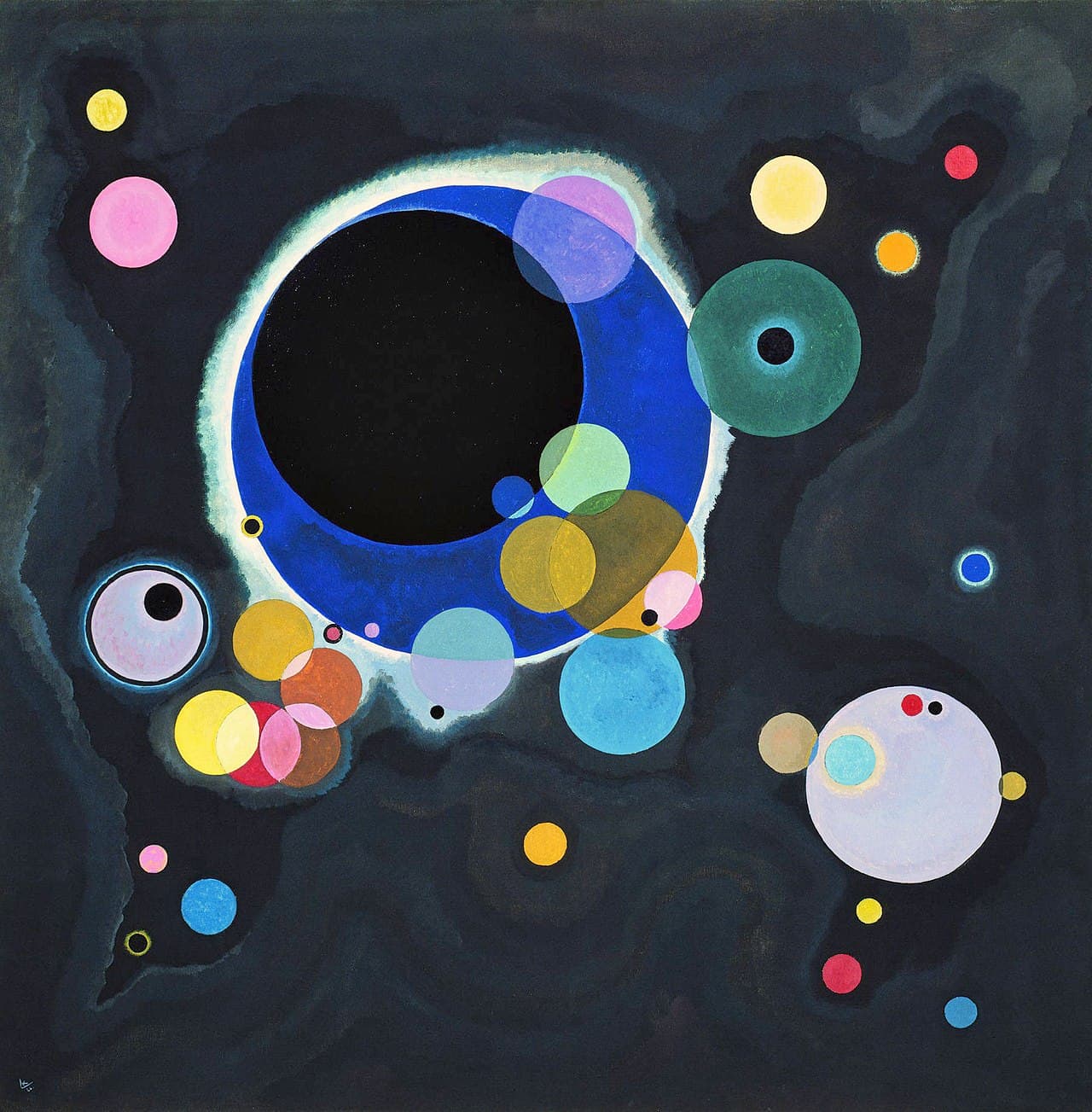
Frequently asked questions
Did Kandinsky paint the first abstract picture?
He was long credited with it, but the Swedish painter Hilma af Klint’s abstract works, made from 1906, are now known to be earlier.
What was the Blue Rider?
An artists’ group founded in Munich in 1911 by Kandinsky and Franz Marc, one of the key groups of German Expressionism.