Art Guide · Painters
Hieronymus Bosch
c. 1450–1516
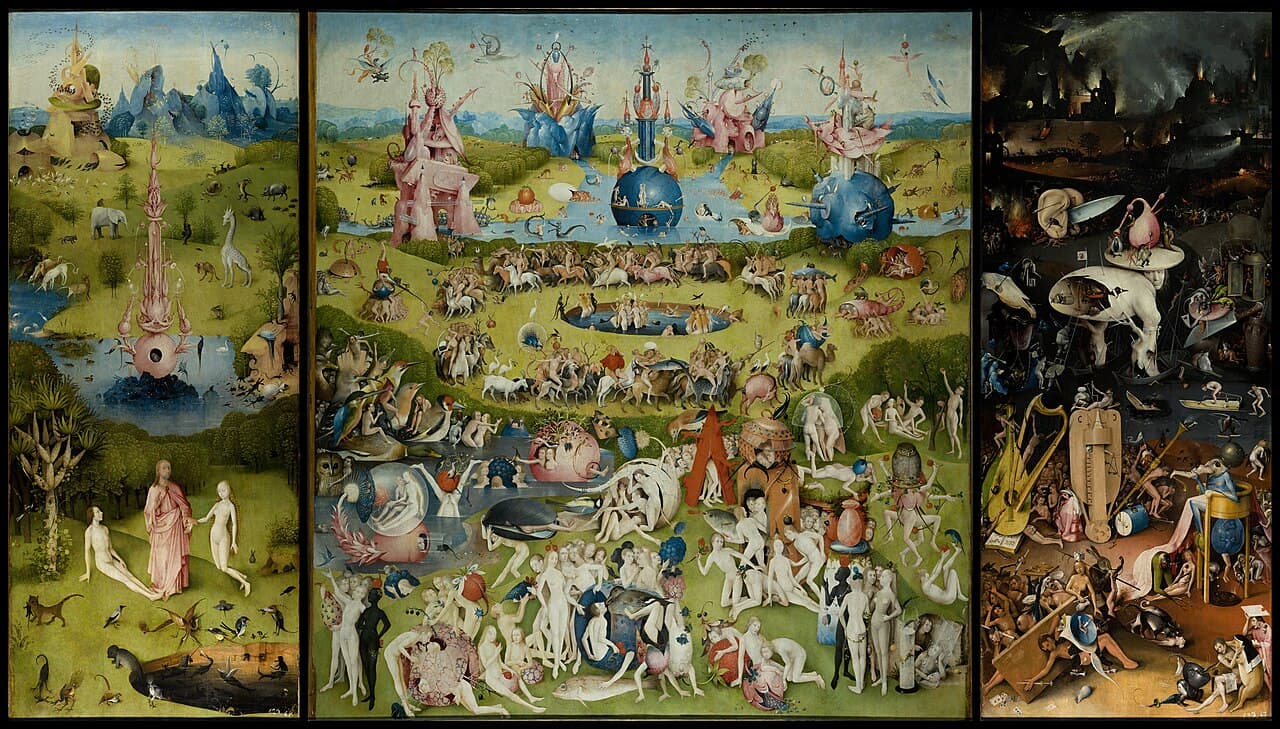
Hieronymus Bosch (c. 1450–1516) was a Netherlandish painter known for scenes teeming with fantastical creatures and symbols. His most famous work is the triptych The Garden of Earthly Delights in the Prado.
Last updated: · Iconica Society editors
Life
He was born into a family of painters in ’s-Hertogenbosch in today’s southern Netherlands, spent almost his whole life there and took his name from the town. He was a member of a religious confraternity, the Brotherhood of Our Lady. Few documents about his life survive; only around 25 paintings are firmly attributed to him.
Style and key works
Bosch explored sin, morality and the afterlife through hybrid creatures, strange contraptions and astonishing detail. The Garden of Earthly Delights (c. 1490–1510) shows, from left to right, Paradise, a garden of earthly pleasures and Hell; its meaning is still debated. Centuries later the Surrealists claimed him as a forerunner.
Key works
Shop Hieronymus Bosch posters →Frequently asked questions
Where is The Garden of Earthly Delights?
In the Prado Museum in Madrid.
What do Bosch’s paintings mean?
Mostly religious themes such as sin, morality and salvation, though the exact meaning of his symbols has been debated for centuries.