Art Guide · Painters
Raffaello
1483–1520
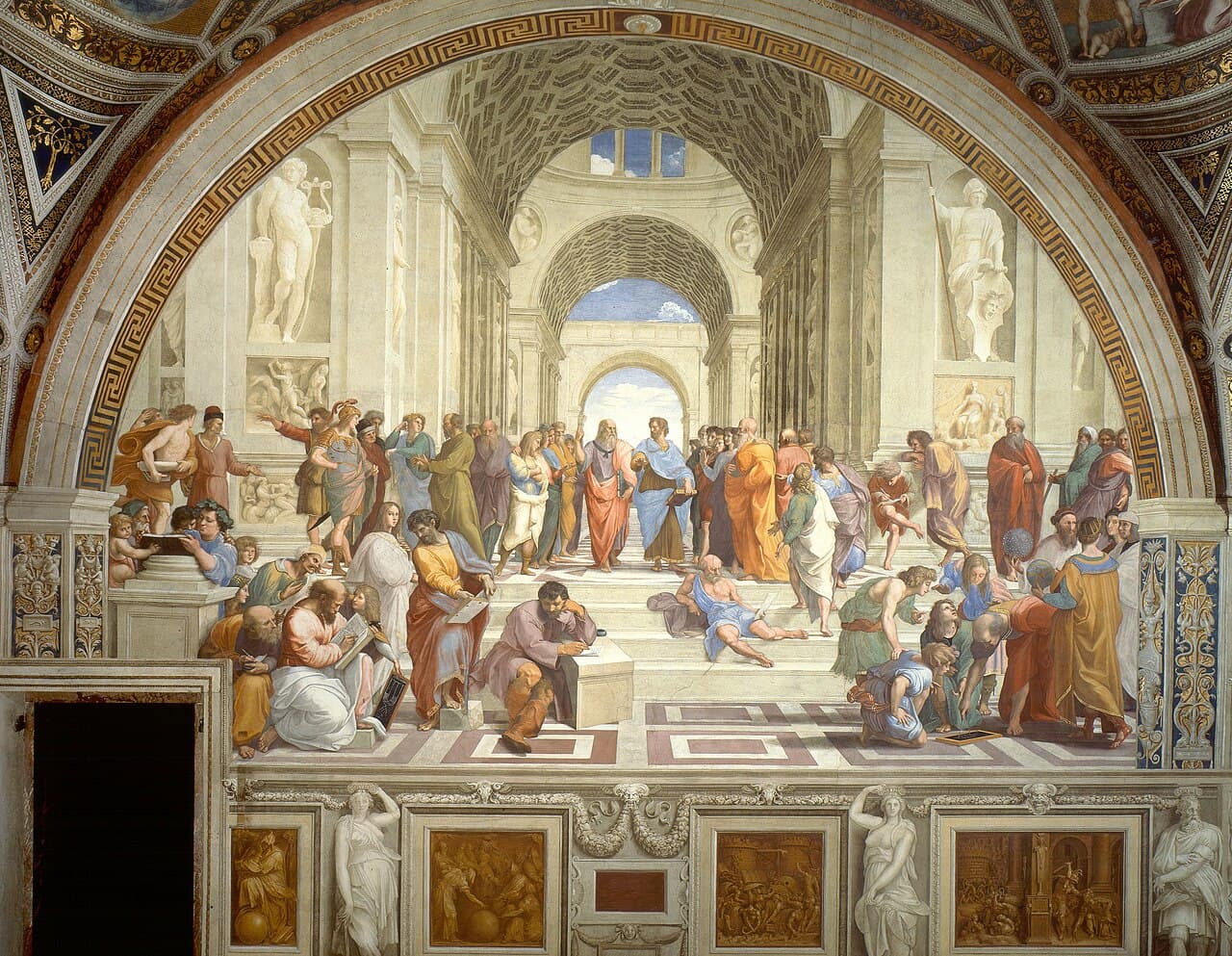
Raffaello Sanzio, known as Raphael (1483–1520), is one of the three great masters of the High Renaissance with Leonardo and Michelangelo. He is known for his balanced, harmonious compositions, his graceful Madonnas and the School of Athens fresco in the Vatican.
Last updated: · Iconica Society editors
Life
Born in Urbino, the son of the painter Giovanni Santi, he trained with Perugino. From 1504 to 1508 he studied the work of Leonardo and Michelangelo in Florence. In 1508 Pope Julius II called him to Rome, where he decorated rooms in the Vatican with frescoes and soon ran the city’s largest workshop.
Besides painting, he served as architect of St Peter’s Basilica. He died in Rome in 1520, aged just 37, and was buried in the Pantheon.
Style and key works
Raphael’s painting is the benchmark of clarity, balance and grace. The School of Athens (1509–11) gathers the philosophers of antiquity around Plato and Aristotle in an ideal architecture. The two little cherubs at the bottom of the Sistine Madonna (1512) have become one of the most reproduced images in the world in their own right.
Key works
Shop Raffaello posters →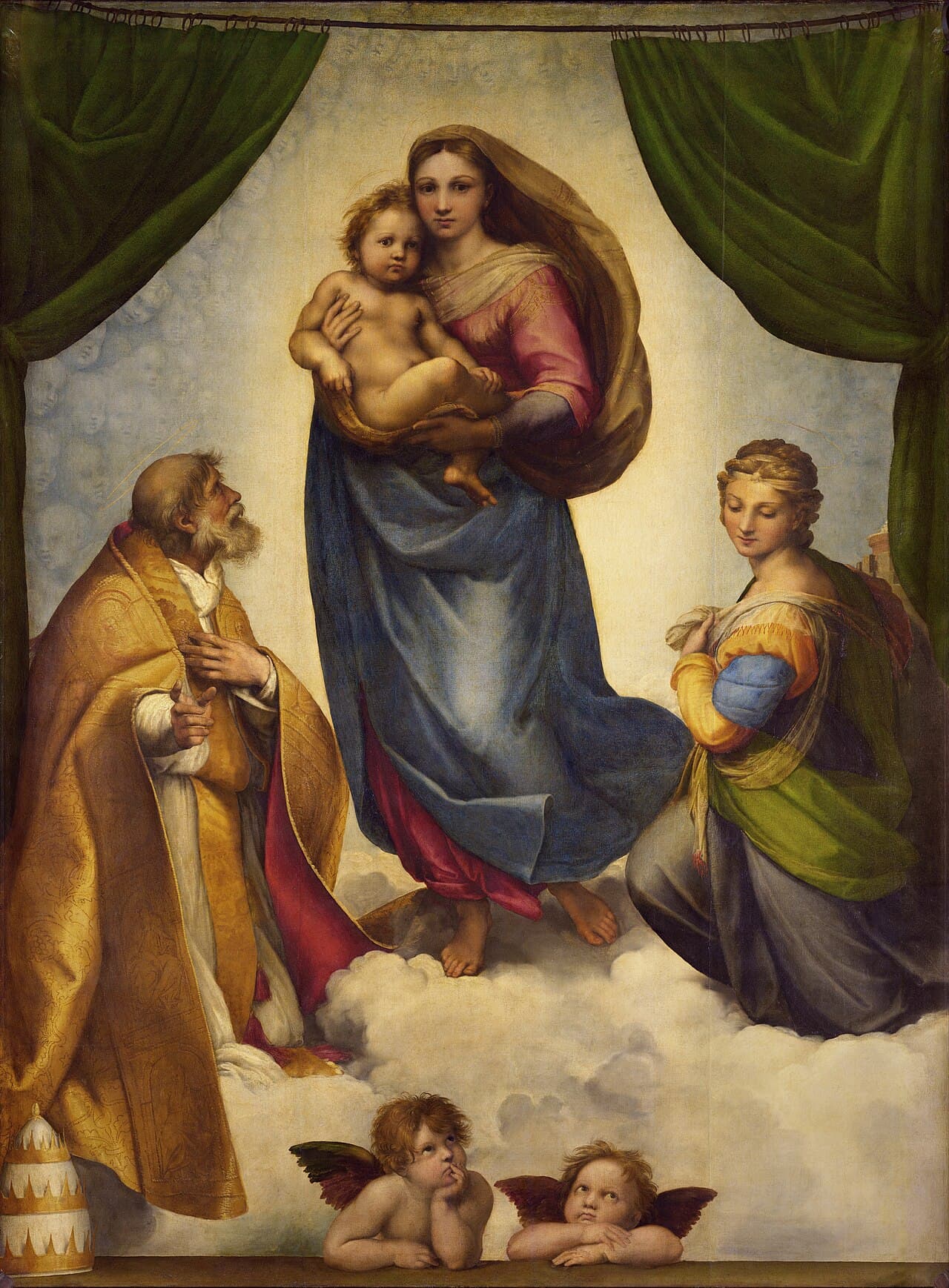
Frequently asked questions
Where is The School of Athens?
It is a fresco on a wall of the Stanza della Segnatura, one of the Raphael Rooms in the Vatican Museums.
Where are the Sistine Madonna cherubs?
At the bottom edge of the painting, which hangs in the Old Masters Picture Gallery in Dresden, Germany.