Art Guide · Painters
Jan van Eyck
c. 1390–1441
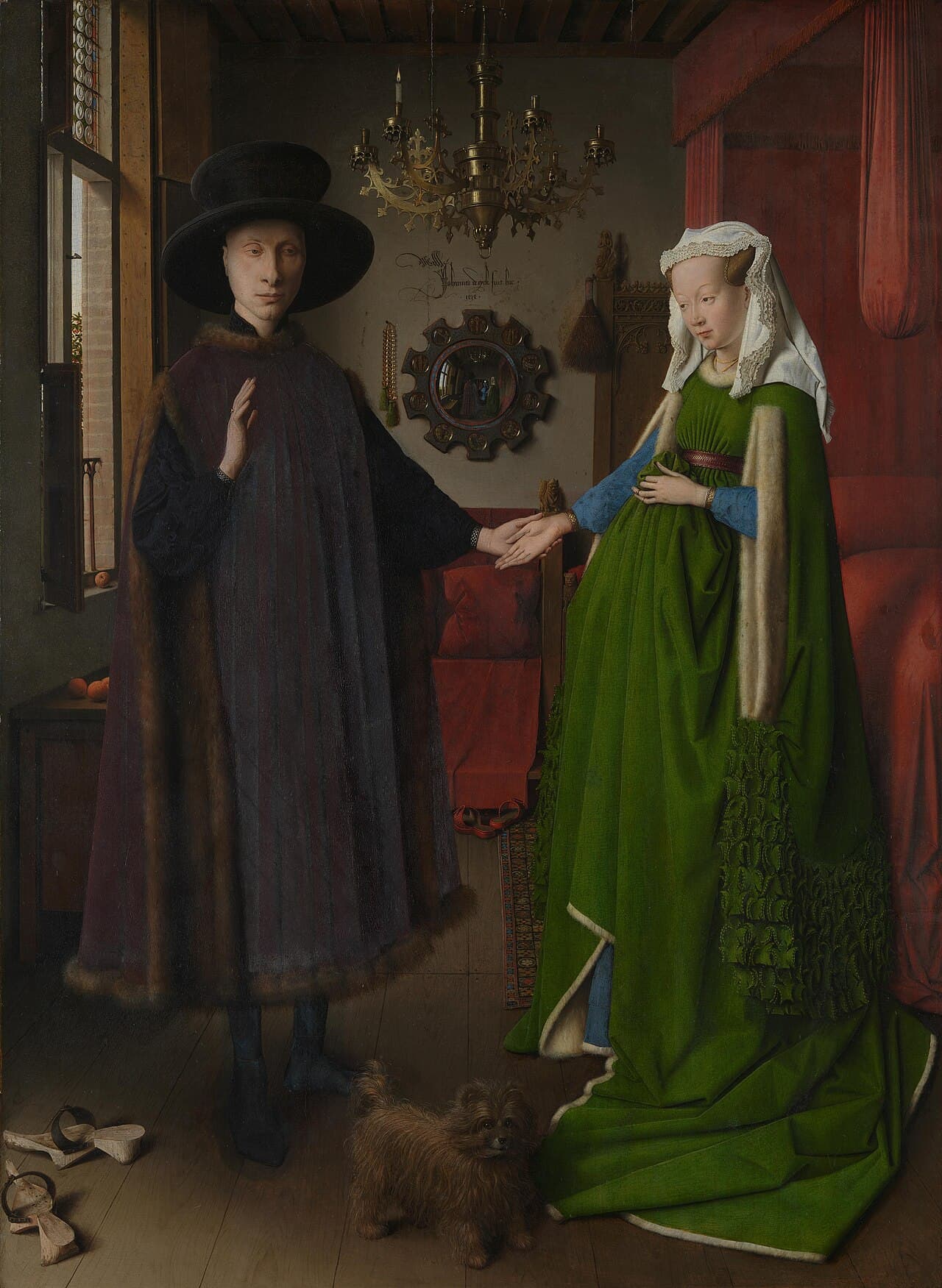
Jan van Eyck (c. 1390–1441) was a Flemish painter who achieved extraordinary detail and light in oil paint. The Ghent Altarpiece and the Arnolfini Portrait are masterpieces of the Northern Renaissance.
Last updated: · Iconica Society editors
Life
Little is known of his early life. From 1425 he served Philip the Good, Duke of Burgundy, as court painter and trusted envoy, travelling as far as Portugal on diplomatic missions. He spent his final years in Bruges.
Style and key works
Van Eyck did not invent oil paint, but with thin, translucent layers he turned it into a medium of extraordinary detail and luminosity. The Ghent Altarpiece, begun with his brother Hubert and completed in 1432, and the Arnolfini Portrait of 1434 (National Gallery, London) are his most famous works. The convex mirror on the back wall of the Arnolfini Portrait reflects the room and two people at the door, and above it is written in Latin “Jan van Eyck was here, 1434”.
Key works
Shop Jan van Eyck posters →Frequently asked questions
Did Van Eyck invent oil painting?
No, oil paint was used before him, but he developed the technique so masterfully that he was long credited with inventing it.
Where is the Arnolfini Portrait?
In the National Gallery in London.